
The number that started this whole experiment was 1,680. That was the all-in quote a friend of mine, Renata, had been given for seven nights in Paris one spring, a small hotel near the 11th, the flights from Toronto, a museum pass, and the kind of dinners you photograph. She loved the idea. She also did the math on her remaining vacation days and her savings and felt her stomach drop.
So she ran a second quote, almost as a joke: what would a full month in Mexico cost if she planned it the way she plans everything else, in a spreadsheet, with a buffer, and without pretending she’d suddenly become a person who skips lunch? The answer came back at roughly the same 1,680. Same money, four times the days. She went.
I asked her to keep every receipt, and she did, because Renata is the kind of person who keeps every receipt. What follows is her actual month, rounded gently for privacy but honest about where the money went. Treat her as a stand-in for a careful traveler rather than a celebrity, your numbers will shift, but the shape of the budget holds.
The headline comparison
Before the breakdown, here is the side-by-side that convinced her. One week of a “treat yourself” Paris trip against thirty-one days of a steady, comfortable Mexico trip. Both are real plans she costed; only one of them got booked.
| Category | Paris, 7 nights | Mexico, 31 nights |
|---|---|---|
| Flights from Toronto | around $620 | around $410 |
| Accommodation | around $700 | around $560 |
| Food & drink | around $280 | around $430 |
| Local transport & activities | around $80 | around $280 |
| Total | ~$1,680 | ~$1,680 |
Notice she actually spent more on food and activities in Mexico, she just got a month of them. The savings came from the slow, structural costs: a bed, and the daily friction of being somewhere expensive.
Step one: she picked a base, not a tour
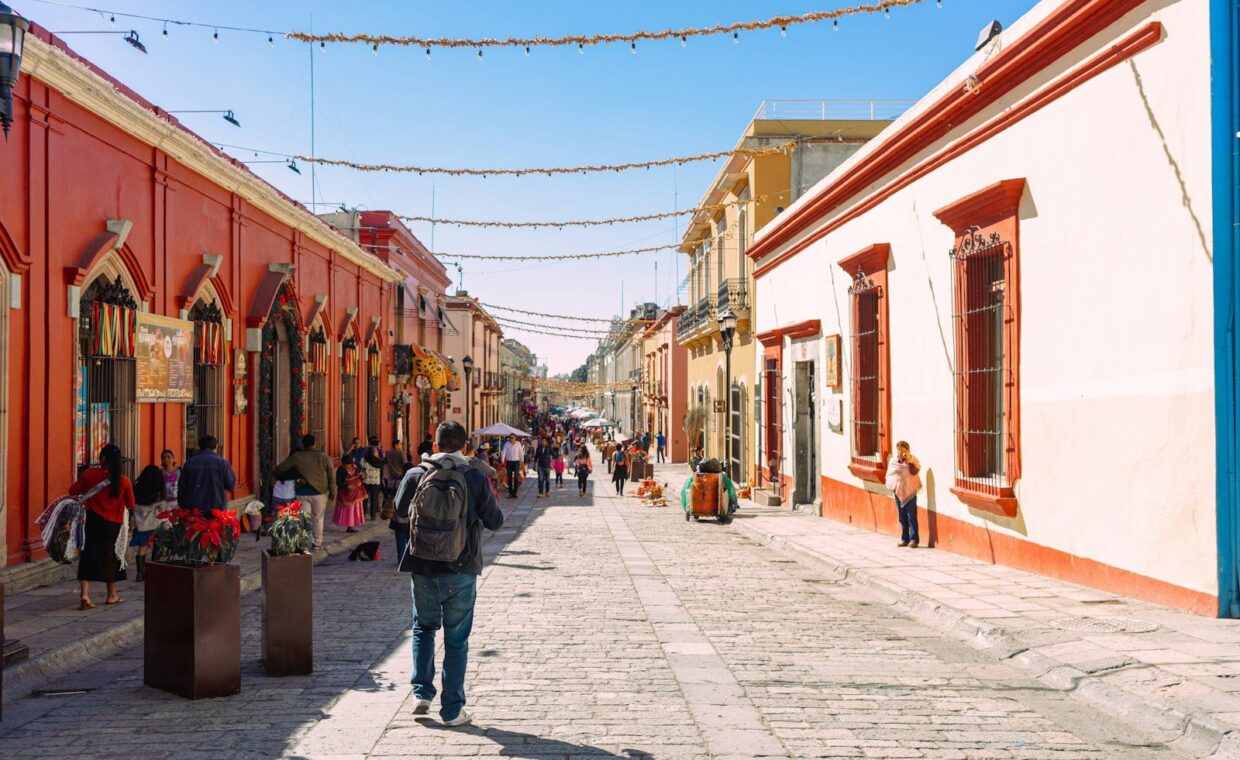
Renata’s first decision did most of the work. Instead of a loop through five cities, she chose Oaxaca as a home base for three weeks, with a short side trip to Puerto Escondido on the coast. One base means one apartment, one set of routines, and almost no transit days, and transit days are where budgets quietly bleed.
She booked a small one-bedroom through a long-stay listing for about $18 a night. That is not a hostel price; it is a private apartment with a kitchen, because she knew the kitchen would pay for itself. She vetted the place carefully before sending money, reading the reviews the way I’d recommend in my guide to judging a cheap guesthouse from reviews alone, watching for the same complaint mentioned twice, and for hosts who answer questions in full sentences.
A market breakfast of eggs, avocado, and fresh tortillas ran her about $2 to assemble at home. Eaten out daily for a month, those small breakfasts alone would have added well over $100.
Step two: she let the markets feed her
This is the part Renata still talks about. Oaxaca’s markets meant she rarely paid restaurant prices for ordinary meals. A heaping bag of produce was a few dollars. A comida corrida, the set lunch of soup, a main, and agua fresca that local cafés run midday, cost her around $4 and was usually her biggest meal.
She still went out. She budgeted deliberately for it: one “proper” dinner or mezcal tasting roughly every third night, the kind of evening that would have been a Tuesday in Paris. Because the baseline was so cheap, those treats sat comfortably inside the plan instead of breaking it. Her food total came in higher than the Paris week precisely because she could say yes more often.
A rough daily food rhythm
- Breakfast at home from the market, about $2
- Set lunch out, about $4
- A snack, coffee, or pastry in the afternoon, about $2
- A light dinner at home most nights, a real one out every few days
Step three: the flights took patience, not luck
The $410 round trip wasn’t a fluke fare. She set price alerts six weeks out, kept her dates loose by three days on each end, and flew midweek. Flying into Mexico City and taking a cheap regional connection to Oaxaca shaved off the premium that the direct, convenient routing wanted to charge.
I want to be honest here, because this is where people get discouraged: she checked prices most mornings for about a month before she booked. It was ten seconds with her coffee. The flexibility, not the obsession, is what saved the money.
A pricey European week assumes the cost is fixed and you simply pay it. A month in an affordable country assumes you are buying time, and time is the cheapest thing to buy well.
Step four: she planned for the days that go wrong
Calm budgets have slack built in, and Renata’s did. She set aside about $120 as a “things happen” line, and roughly half of it got used, a stomach bug that meant a pharmacy visit and two restful days, a last-minute bus change, a splurge on a cooking class she hadn’t planned. Because the cushion existed, none of it felt like a crisis or a guilt trip.
This is the difference between a tight trip and a fragile one. A fragile budget assumes nothing goes wrong; a tight one assumes something will and decides in advance that it’s fine.
What this does and doesn’t prove
It would be dishonest to suggest every cheap-sounding destination delivers this. Some don’t, the bargain is on the surface and the real costs hide underneath, which is exactly the pattern I unpack in my piece on supposedly cheap places that quietly drain your budget. Mexico worked because the savings were structural: housing, daily food, and local transport were all genuinely lower, not just the headline flight.
If a long-haul trip feels like too much, the same logic scales down close to home. Several of Eastern Europe’s most underrated capitals follow an almost identical curve, modest flights, cheap excellent food, and beds that cost a fraction of the famous cities a train ride away.
Pick one base over a multi-city loop. Book a place with a kitchen and let markets feed you. Stay flexible on flight dates instead of chasing a single fare. Build a real buffer so a bad day stays a bad day, not a budget collapse. The savings live in the slow, daily costs, so buy more days, not fewer comforts.
Could a month in Mexico really cost the same as a week in Paris?
For a careful traveler basing in one affordable city, yes, Renata’s two quotes both landed near $1,680. A luxury month in a resort zone would cost far more; the comparison holds for the steady, market-fed style described here.
Isn’t a kitchen apartment less fun than eating out every night?
It’s the opposite. Cheap home breakfasts and set lunches freed up the budget for a real dinner or tasting every few nights, more memorable meals, not fewer, because each one was a chosen treat rather than the default.
How far ahead should I start planning a trip like this?
Give yourself about six weeks. That’s enough time to set flight alerts, keep your dates flexible, vet a long-stay apartment properly, and let a fair fare appear instead of grabbing the first one.
Renata came home with most of a month of photos, a mezcal habit, and the quiet confidence of someone who had tested an idea instead of just admiring it. The lesson she keeps repeating to me isn’t about Mexico at all. It’s that the price tag on the brochure is almost never the price you have to pay, you just have to be willing to count.