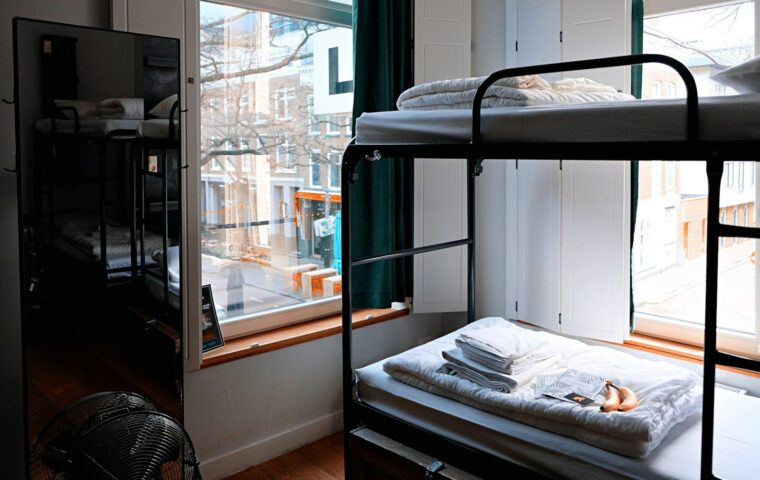


It was 3 a.m. in Seville, and I lay rigid in a top bunk, counting the seconds between a dying ceiling fan’s buzz and the snore two beds over. The dorm smelled of last night’s sangria and someone’s instant noodles. The photos had looked fine; the price, about €14, had looked even better. Yet here I was, wide awake, doing the maths on what that “saving” was costing me in sleep.
I’ve stayed in maybe two hundred hostels since, from a converted convent in Lisbon to a glass box in Tokyo, and a restful night almost never comes down to luck. It comes down to a handful of details buried in the listing, the ones most people scroll straight past on their way to the price.
These are the eight I now scan for before I hand over a single euro. Get four or five right and the dorm tends to deliver. Miss them, and no thread count will save you.
1. A real privacy curtain on every bunk
The single best predictor of a good night is a curtain you can actually pull shut, not a sad strip of fabric that gaps in the middle, but a proper full-length one that turns your bunk into a cocoon.
I look for the word “pod” or “privacy curtain,” then zoom into the photos. If the beds are open, with strangers’ feet at eye level and a corridor light blazing all night, I keep scrolling. The curtain does more than block light, it gives your brain permission to switch off.
Check the photos for fabric on the bunks before you read the description. If you can see every mattress from the doorway, the room will feel like a train platform at midnight.
2. A reading light and a power socket you can reach from the pillow
This sounds trivial until you’re charging your phone on the floor across the room, hoping nobody steps on it. A personal light and a socket built into the bunk are the difference between a bed and a shelf you happen to sleep on.
Good hostels photograph this proudly, a little lamp, a USB port, a shelf for your glasses. The bad ones say nothing, which usually means one overloaded socket by the door and a polite war over who gets it. When the listing is silent on power, pack a slim power bank.
3. A lockable place for your bag, not just a vague promise of “lockers”
“Lockers available” is one of the slipperiest phrases in hostel listings. Available where? Big enough for a full pack, or just your passport? Free, or €3 a day?
I want a photo of a locker that swallows a full backpack, with a clear note on whether I bring my own padlock. A secure bag does something quiet but real: it lets you relax, you sleep differently when your laptop isn’t tucked under your knees. If a listing is coy about storage, I message the host for dimensions, and the reply tells me a lot about how the place is run.
4. Honest, recent reviews that mention sleep, not just “great vibes”
Reviews are where the truth leaks out, but you have to read for the right things. “Amazing social scene” can be code for “you will not sleep before 2 a.m.” I sort by most recent and search the text for the words that matter: quiet, clean, hot water, noise, street.
One genuine review saying “the dorm backs onto a late-night bar, bring earplugs” is worth more than fifty five-star ratings with no detail. Sound, smell, and water pressure never show up in a gallery; recent reviews are the only window you get. I also check whether the latest reviews still sound like the older ones, a hostel under new management can change character in a single season.
5. Air that moves, a window that opens, a fan, or real AC
A dorm with twelve sleeping bodies and no airflow becomes a warm, stale soup by dawn. I notice the air the moment I walk in, that close, slightly sweet smell of a sealed room, and I’d rather know about it before I book.
Look for a window that opens, a ceiling fan, or AC the reviews confirm is more than decorative. In Athens one August I paid €4 extra a night for working AC and called it the best money of the trip. It’s also why I lean on the cooler weeks of shoulder season, when the air outside is kind, a stuffy dorm stops being a dealbreaker.
6. A kitchen that’s genuinely usable, not a kettle in a cupboard
I travel for the food, so this one is personal. A proper kitchen, real hobs, a sharp knife, a fridge with actual space, turns a market haul into dinner and shaves your daily spend.
I scan the photos for pans on hooks and a counter you could actually chop on. “Self-catering” with no kitchen photo usually means a microwave and a sticky toaster. When the kitchen looks loved, the whole hostel tends to be; I once spent an evening in Bologna cooking ragù beside three strangers, and that garlicky chaos was the best night of the week. The savings stack up too, cooking half your meals rivals what you’d save chasing a monthly long-stay discount.
7. A location that’s calm at night but close to where you want to be
There’s a sweet spot most listings won’t spell out: near enough to walk home from dinner, far enough that the street isn’t a nightclub by midnight. A hostel above a bar will be loud; one on a quiet lane two minutes from the action is gold.
I pull up the map, then read reviews for “street” and “noise” together. A 3 a.m. moped chorus undoes everything a good mattress gives you. A listing boasting “the heart of the nightlife district” is telling you exactly what you’ll hear at 2 a.m. For light sleepers this can matter more than the bed itself, and it’s a big reason some travellers decide a private room over a dorm is worth the jump.
8. Bathrooms that won’t make you queue at 8 a.m.
The unglamorous final feature, and the one that quietly ruins mornings. A dozen people sharing a single shower means a cold, damp wait when everyone’s rushing for the same train.
I look for the bathroom-to-bed ratio, a good listing tells you, a vague one makes you guess, and read reviews for “hot water” and “clean.” When a hostel is proud of its bathrooms it photographs them; silence here usually has a reason.
Privacy curtains, airflow, and a quiet location are the non-negotiables, miss those and the night suffers regardless. Storage, power, and reviews are your trust signals; the kitchen and bathrooms are the bonus. My rule: nail the three non-negotiables plus two trust signals and I book. Silence on three or more features is the answer.
Is a cheaper hostel always a false economy?
No, plenty of inexpensive dorms tick the important boxes. The price isn’t the problem; the missing features are. A €12 bed with a curtain, a reachable socket, and good airflow will out-rest a €25 one that’s open, stuffy, and above a bar.
How many reviews should I read before booking?
At least ten, sorted by most recent, skimming for words like quiet, clean, hot water, and street noise. One detailed recent review beats fifty vague five-star ratings, and recency matters because a hostel’s character can shift in a season.
What if the listing doesn’t mention something I care about?
Message the host and ask directly, locker size, whether the AC works, how many showers per dorm. Their reply, and how fast it comes, tells you almost as much as the answer itself.
None of this takes long once it’s a habit, a two-minute scan of the photos, the map, and the last ten reviews. Do it consistently and the 3 a.m. Seville nights become rare. Skip it, and you’re rolling the dice on whether tomorrow’s you gets any sleep at all.