
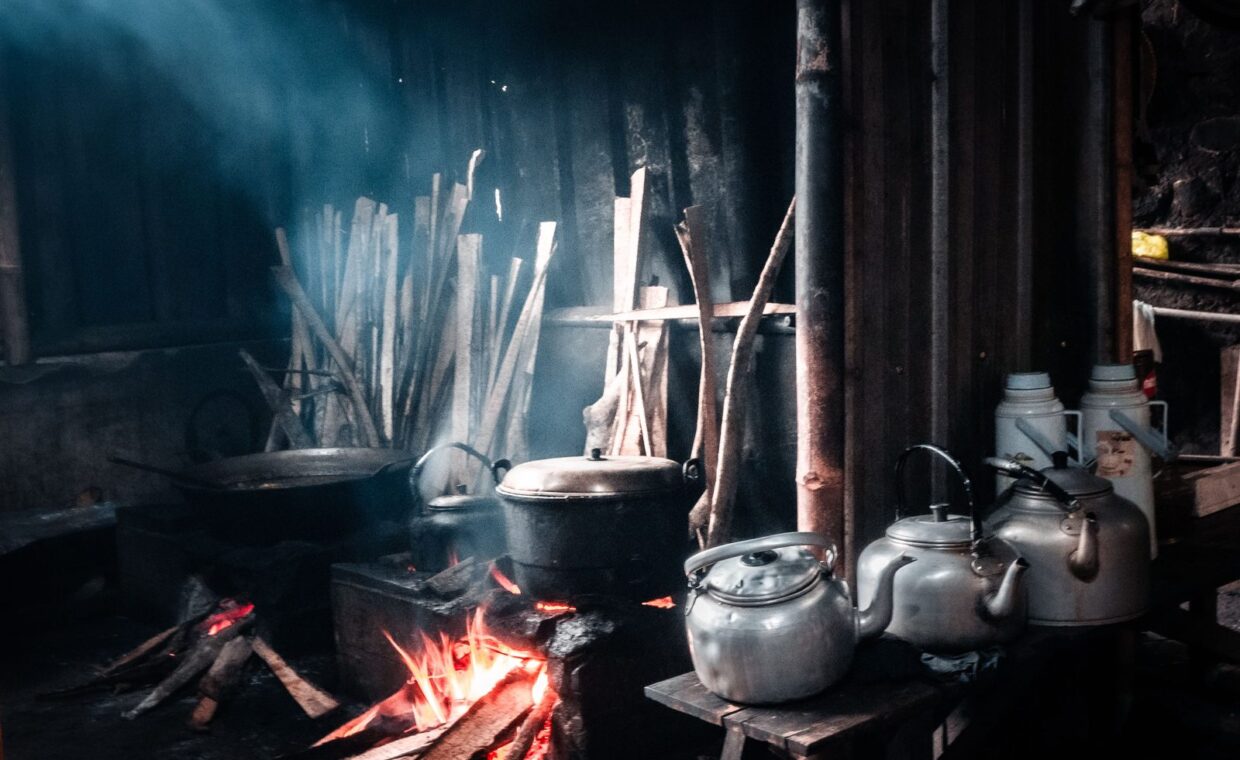
Last winter I walked into a hostel kitchen in Tirana and counted the equipment: one dented frying pan, a saucepan with no handle, two forks, and a knife so dull I could have spread it on toast. There was also a half-empty bottle of someone’s olive oil and a salt shaker. That was the whole arsenal. I made dinner for four people that night for under eight euros total.
Here is the thing nobody tells you about hostel kitchens. They never have the one thing the recipe needs. So you stop cooking from recipes and start cooking from whatever is physically in front of you, building a tiny mental playbook of meals that survive bad equipment. Do that and your food bill drops by half almost overnight.
This is the exact system I use. No fancy gear, no spices you will abandon at the airport. Just the pan that is already there.
Step 1: Audit the kitchen before you buy a single thing
Walk in empty-handed and take inventory first. I literally open every drawer. You are looking for three things: one heat source that works, one vessel to cook in, and one cutting surface. Everything else is a bonus.
Check the hob actually lights, a shocking number of hostel burners are dead or run on a gas bottle that is empty. Check whether there is any oil, salt, or pepper left behind by previous guests. In my experience roughly half of hostel kitchens have a communal oil bottle and a near-full salt shaker sitting in the cupboard. That alone saves you four or five euros you would otherwise waste on a full bottle you cannot carry onward.
Photograph the kitchen shelf on your phone before you shop. When you are standing in the supermarket trying to remember if there was a can opener, the photo answers it. I have bought three can openers in my life because I forgot to check.
Step 2: Buy the five-ingredient base, not a pantry
You are here for days, not months. Resist stocking a full kitchen. My standard hostel shop is five items: eggs, an onion, a tomato or a tin of chopped tomatoes, a starch (pasta, rice, or bread), and one cheap protein or vegetable that looks good that day. In most of Eastern Europe that came to around six euros and fed me for two days.
The trick is buying things that work in any combination. Eggs go with everything. An onion is the base of every cheap meal on earth. Pasta and a tin of tomatoes is dinner whether you are in Lisbon or Lviv. Skip anything that needs a second specialised ingredient, that is how people end up tossing half a jar of curry paste in the bin.
If you want to push the savings further, the same logic that keeps your kitchen lean also applies to where you eat out, which I get into in this look at the food spending mistakes that quietly wreck a travel budget.
Step 3: Master the one-pan rotation
With one pan and a dull knife you can still cook four meals on genuine repeat. Here is my actual rotation, the one I have made in maybe thirty countries.
Tomato pasta. Boil pasta in the pan, drain, set aside. Same pan: soften a chopped onion in oil, add the tin of tomatoes, salt, simmer five minutes, fold the pasta back in. One pan, two euros, done. This is my default when I am tired.
Loaded eggs. Fry an onion, throw in any vegetable you bought, crack three or four eggs over the top, stir until set. It is a frittata if you are feeling generous, scrambled eggs with stuff if you are honest. Costs about a euro fifty.
Garlic-oil anything. Warm oil, add sliced garlic until golden, toss in pasta, rice, or torn bread. Salt heavily. It sounds like nothing and it is one of the best things you will eat all week.
You do not slice with a blunt hostel knife, you tear and smash. Crush garlic under the flat of the blade, tear onions into rough chunks, snap vegetables by hand. Cooking softens everything anyway, so precision is wasted effort. I have not made a neat cut in a hostel in years and the food tastes identical.
Step 4: Season like you mean it
The single reason hostel cooking tastes sad is under-seasoning. People are timid with the communal salt. Don’t be. Salt the pasta water until it tastes like the sea, salt the eggs before they set, salt the oil before the garlic goes in.
One cheap upgrade I always make: a single fresh chilli or a lemon, somewhere between thirty and fifty cents. Acid and heat make plain food taste deliberate instead of accidental. If the market has herbs going cheap, tear a bunch over everything at the end. That two-euro pasta suddenly reads as a meal you chose, not one you settled for.
Step 5: Cook around the crowd, not against it
Shared kitchens have a rush hour, usually seven to nine in the evening, when every burner is taken and tempers are short. I eat at six or at ten. You get the whole kitchen, the pans are free, and nobody is hovering for your hob.
Cooking off-peak also means you can actually taste what the place eats. Some of my best hostel meals started by watching what the person next to me was making and copying it. That same instinct, follow the locals, is the whole argument behind eating where the locals do instead of from a tourist menu, and it works just as well over a shared stove as it does in a back-street diner.
Clean your pan immediately and never claim a shelf in the communal fridge for three days of leftovers. Hostels bin unlabelled food fast, and the fastest way to lose your ingredients is to leave them looking abandoned. Label your bag with your bed number and a date.
Step 6: Plan meals around your route
If you are moving every two days, buy in single portions and finish everything before checkout. If you are parked somewhere for a week, you can buy a slightly bigger base and bring the per-meal cost right down, a bag of rice or pasta that feeds you six times changes the maths completely.
This is where self-catering pairs perfectly with a slow, overland trip. On a budget run like this ten-day Balkans route built to stay under fifty dollars a day, cooking even one meal a day in the hostel is often the difference between hitting that number and blowing past it. Three euros a plate versus twelve at a restaurant, repeated across ten days, is real money you keep.
What it actually costs
Here is a rough per-meal breakdown from a recent week, so you can see the gap for yourself.
| Meal | Cook it yourself | Budget restaurant |
|---|---|---|
| Tomato pasta | ~€2.00 | ~€9.00 |
| Loaded eggs | ~€1.50 | ~€7.00 |
| Garlic-oil rice | ~€1.20 | ~€8.00 |
Cook two meals a day and you are saving somewhere around twelve to fifteen euros daily. Over a two-week trip that is a couple of hundred euros, a few extra nights of accommodation, or the museum tickets you would otherwise skip.
What if the hostel kitchen has literally no oil, salt, or pan?
Buy the smallest bottle of oil and a cheap salt, together under two euros in most countries, and treat them as your travelling kit. For a pan, ask reception; many hostels keep a spare behind the desk that is not on the open shelf.
Is cooking in a hostel actually cheaper than cheap street food?
Not always. In parts of Southeast Asia a street plate can undercut a supermarket. But across Europe, the Balkans, and most of the Americas, self-catering wins by a wide margin, usually three to four times cheaper per meal.
How do I cook without a fridge for my leftovers?
Cook single portions and eat the lot. If you must keep something, most hostel fridges have space, just label it clearly with your bed number and the date so staff and other guests leave it alone.
None of this needs skill. It needs the willingness to make the same four meals on repeat and season them like you care. Do that and a wrecked communal kitchen with one dull knife becomes the cheapest, and honestly one of the most fun, parts of the trip. I still remember that Tirana dinner better than most restaurant meals I have paid four times as much for.