
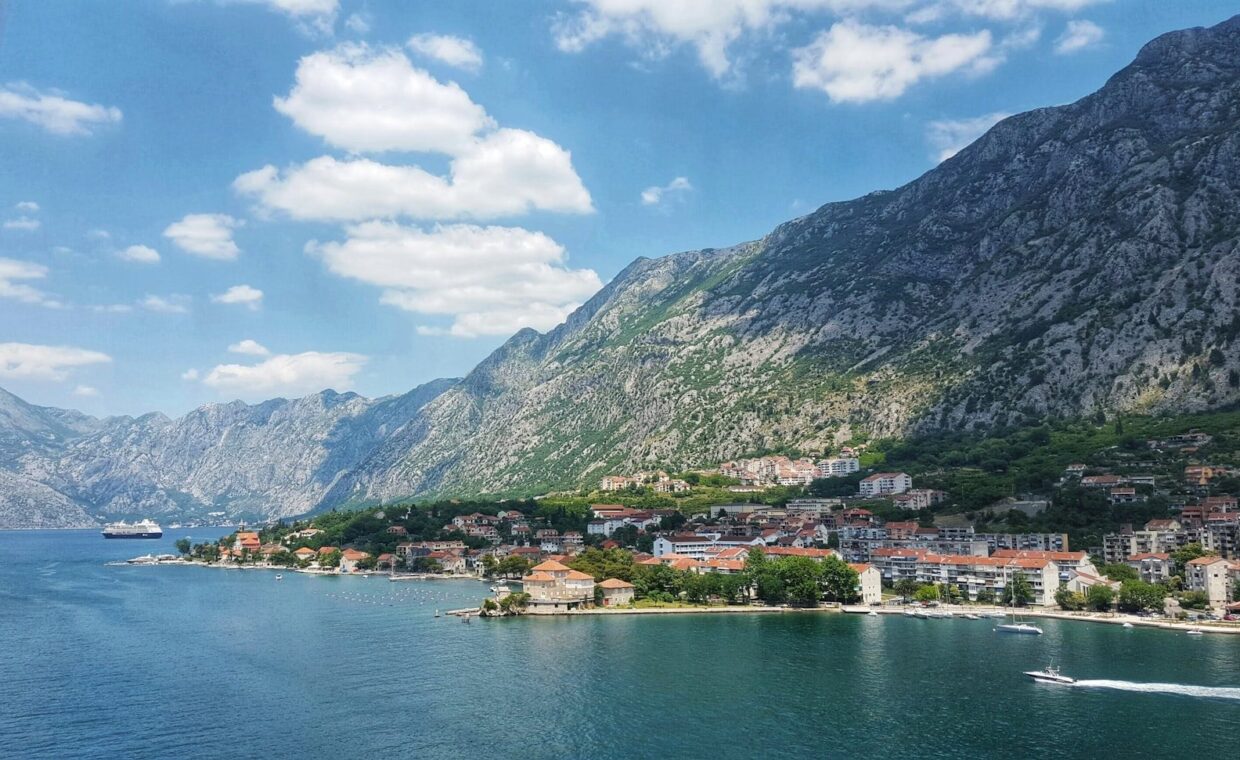
The first thing I noticed in Kotor wasn’t the bay everyone photographs, that wall of grey mountain dropping into water so still it doubles the sky. It was the smell. Grilled ćevapi drifting out of a hole-in-the-wall grill at nine in the morning, frying onions, someone’s strong coffee. I’d just stepped off a two-euro bus, and breakfast cost less than the espresso I’d had at the airport.
That gap, between what you pay to arrive in the Balkans and what you pay once you’re there, is the whole reason this route works. Across ten days, from the Adriatic coast up through Montenegro, North Macedonia and into Bulgaria, I kept my spending under fifty dollars a day without skipping a single meal I wanted or a fortress I felt like climbing. Here is exactly how to build that trip, day by day.
Step 1: Lock the route before the flights
Most people book a cheap flight into Dubrovnik and then panic about the rest. Do it the other way around. The route is the budget, a tight, mostly southward line means short bus legs and no backtracking, which is where money quietly leaks out of a Balkans trip.
The spine I’d run: Dubrovnik → Kotor → Podgorica → Skopje → Sofia, finishing with a flight home from Sofia, which is one of the cheapest airports in Europe to leave from. You fly into one end, out of the other, and never pay to retrace your steps.
Before you commit, sanity-check the on-the-ground costs the way I do for every country, my method for estimating what a destination actually costs before you go takes ten minutes. For the Balkans it confirms the thing that makes the maths work: a sit-down dinner with a drink runs eight to twelve dollars, and a hostel bed is rarely more than eighteen.
Montenegro uses the euro; North Macedonia uses denars; Bulgaria uses leva. Card machines exist but bus drivers and bakery counters want coins. Pull out a modest amount per country and spend it down before the next border.
Step 2: Days 1–2, Dubrovnik on a day pass, sleeping outside the walls
Dubrovnik is the expensive bookend, so treat it as a starting gun, not a sit-down. The Old Town inside the walls is a marble-polished trap where a coffee costs what a meal costs ninety minutes south. Sleep in Lapad or Gruž instead, a dorm bed runs around sixteen dollars versus double that near the gate.
Spend day one walking the city walls early, before the cruise crowds and the heat, then eat where locals do: a bakery burek, flaky and dripping, for under three dollars on the harbour wall with your feet over the water.
Day two, catch the late-morning bus to Kotor, a stunning two-and-a-half-hour coastal ride for roughly fifteen dollars that crosses into Montenegro along the way.
Step 3: Days 3–4, Kotor and the bay for almost nothing
Kotor is where the budget starts feeling generous. The walled old town is free to wander, and the climb to the fortress of San Giovanni, 1,350 steps, calves burning, costs about eight dollars and lays the whole fjord beneath you. Go at golden hour, when the stone turns honey-coloured and the cruise ships have sailed.
Food here is the quiet joy. Fresh grilled fish at a konoba back from the waterfront runs around ten dollars, and the smoked ham and young cheese they bring to start could be a meal on its own. I ate dinner two nights running for less than one Dubrovnik lunch.
Use Kotor as your base and take the local bus around the bay to Perast, a tiny baroque town of stone and bell towers, for a couple of euros. The whole day, boat to the island church included, came in under fifteen dollars.
Step 4: Days 5–6, cross to Skopje via Podgorica
This is the longest travel stretch, so frame it the way you’d frame those weekend-sized city breaks where the journey is half the point, the logic behind the best cities where a whole weekend costs less than dinner back home. From Kotor, a short bus to Podgorica (around six dollars) connects to the long-haul coach toward Skopje.
That coach runs roughly twenty-five to thirty dollars and crosses genuinely cinematic mountain country. Take the day option if you can, the scenery through the Macedonian highlands is worth staying awake for.
Skopje itself is gloriously strange: oversized statues, an Ottoman bazaar, a river of cheap, brilliant food. A hostel bed runs around twelve dollars, the lowest of the trip.
Bed $12, two bakery meals and a market lunch $7, coffee and a riverside beer $4, bazaar and the Kale fortress free. Day total: about $23, the kind of day that buys back a splurge elsewhere.
Step 5: Days 7–8, eat your way through the Skopje bazaar
Give Skopje two full days and spend them mostly in the Old Bazaar. This is the food chapter of the trip. Tavče gravče, beans baked in a clay pot until the top blisters, for about four dollars. Burek again, here studded with cheese or spiced meat, eaten standing at a counter while the baker pulls the next tray. Thick Turkish coffee in a copper pot for under a dollar.
The Kale fortress and the bazaar’s stone caravanserais are free to walk through. Take the cable car up Mount Vodno (about five dollars return), or hike it for nothing if your legs have recovered from Kotor.
If you’ve fallen for the rhythm and want to slow down, Skopje rewards it. The same move behind negotiating a better rate on a longer booking works on family-run guesthouses, where a few extra nights quietly drops the price.
Step 6: Days 9–10, Sofia and the cheap flight home
The final leg, Skopje to Sofia, is a four-to-five-hour coach for around twenty dollars. Sofia is a fitting close: grand, green, and still one of the most affordable capitals in Europe.
A hostel bed runs around fourteen dollars. Spend your last day on the free walking tour, the golden-domed Alexander Nevsky cathedral (free to enter), and a long lunch of banitsa and tarator, cold cucumber-and-yoghurt soup that tastes like relief on a hot day, for under six dollars.
Then fly out of Sofia. Budget carriers serve it heavily, and because you didn’t backtrack, you never paid twice for the same road.
Beds averaged about $15 a night. Food landed around $14 a day eating well and often. Intercity buses totalled close to $110 for the route. Activities stayed near $6 a day. The daily average sits comfortably in the low forties, under fifty, with room for one proper splurge dinner.
Where the budget actually lives or dies
Two things blow this budget, and both are avoidable: sleeping inside the prettiest old towns instead of ten minutes outside them, and booking a private transfer when a two-dollar local bus was right there. Beyond that, eat where there’s a queue of locals, that single habit kept me under budget more reliably than any spreadsheet.
Is fifty dollars a day realistic in summer?
Yes, with discipline. July and August push hostel prices up, especially in Kotor, so book beds a week ahead and lean harder on bakery and market food. Shoulder months, May or September, make fifty dollars feel roomy.
Do I need to book buses in advance?
For the long legs, Podgorica to Skopje, Skopje to Sofia, book a day or two ahead online or at the station to lock the seat and the price. Short coastal hops you can buy on the spot.
Can I run this route in reverse?
You can, flying into Sofia and out of Dubrovnik. The costs are identical. I prefer ending in Sofia simply because the flights home are usually cheaper from there, but check both before you commit.
I came home having eaten like a king and spent like a student, with a phone full of fortress photos and a real craving for clay-pot beans. The Balkans don’t ask you to choose between cheap and good, just to sit at the right counter and take the bus. Go before everyone else figures that out.