
The first time the Okafors flew carry-on only, they almost didn’t believe it had worked. Five of them, two parents, three kids aged six, nine and twelve, walked straight past the bag drop at the airport, through security, and onto the plane with nothing but the bags on their backs. No queue. No fee. No standing at the carousel afterward, watching other people’s suitcases go round.
I met this family through a packing workshop, and their setup has become the example I reach for whenever a parent tells me carry-on only is “fine for solo travelers but impossible with kids.” It isn’t impossible. It’s a system, and once it’s built, it runs itself trip after trip. The family here is a composite, the details are stitched together from real households I’ve worked with, but every number is the kind you’d actually see at a checkout.
What follows is their per-person setup, the math that made it worth it, and the small habits that kept it from falling apart by day three.
The fee math that started it all
The trigger was a budget-airline booking for a week in Spain. The base fare looked wonderful until the family reached the baggage page. Two checked bags, round trip, came to roughly €240 for the group once you added the return leg and the “we forgot to add it online” gate penalty hanging over them.
That €240 was more than two of their five tickets had cost. The fare itself was a stripped-back one, which is its own decision worth understanding before you book, I walk through that trade-off in choosing between basic economy and a standard fare. The Okafors had picked the cheap fare on purpose. The bags were quietly about to erase the saving.
Across four flights that year, checked bags would have cost the family close to $600. Going carry-on only didn’t just dodge a fee on one trip, it changed what every future booking cost them.
So they set a rule: one cabin bag per person, nothing checked, ever. The challenge was making that survivable for a six-year-old and a twelve-year-old at the same time.
One bag per person, sized to the person
The mistake most families make is buying five identical bags. The Okafors did the opposite, they matched the bag to who was carrying it.
The two parents each took a 40-litre cabin backpack, the kind that opens flat like a suitcase. The twelve-year-old, old enough to be responsible for her own things, got a 30-litre pack. The nine-year-old carried a 22-litre daypack. The six-year-old had a small backpack that held his own comfort items and almost nothing else, his clothes lived in his mum’s bag.
That last point matters. You don’t need every child to carry a full load. You need the bags to add up to enough capacity for the family, distributed so no one is overwhelmed. A good cabin pack doesn’t have to be expensive, either; I’ve seen the sub-$80 ones outlast premium luggage, and I keep a running note on which budget gear actually survives repeated trips.
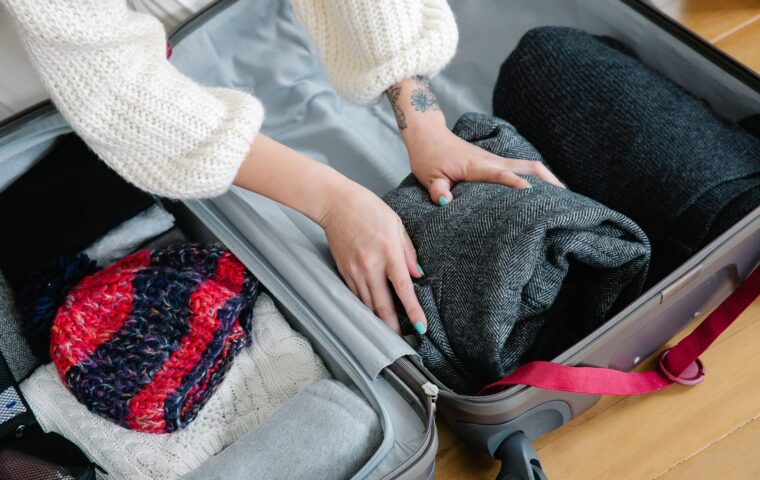
Give each child a bag they can lift into the overhead bin themselves, then test it at home fully packed. If they can’t manage it on the stairs, it’s too big, shift weight to a parent’s bag.
The per-person packing list they actually used
Here’s where the calm, checklist part of me is happiest. The family worked from one master list, adjusted by age. The clothing count assumed they’d do laundry mid-trip, which is the quiet engine behind every carry-on family I’ve ever met.
| Item | Adult | Older child | Younger child |
|---|---|---|---|
| Tops | 4 | 4 | 5 |
| Bottoms | 2 | 2 | 3 |
| Underwear/socks | 5 pairs | 5 pairs | 6 pairs |
| Warm layer | 1 | 1 | 1 |
| Shoes (worn + packed) | 2 | 2 | 2 |
| Sleepwear | 1 set | 1 set | 1 set |
Younger kids get one extra of everything because they’re the ones who’ll spill, fall in a puddle, or need a full change at the worst moment. That single buffer top has saved more flights than any gadget.
The principle of building a wardrobe that mixes and matches inside a single bag is the same one I lay out in detail for a two-week carry-on packing list, the family simply ran five smaller versions of it in parallel.
Toiletries, the part that trips families up
Five people’s toiletries can quietly fill a whole bag if you let them. The Okafors didn’t let them.
They packed one shared liquids bag for the whole family, not one per person. Solid shampoo and a bar of soap covered washing for everyone. A single tube of toothpaste, refillable bottles under the 100ml limit for the few liquids they kept, and a small first-aid pouch with plasters and child paracetamol. Everything else, shower gel, more toothpaste, they bought on arrival for a few dollars.
Liquids over the limit are the most common reason a smooth security run falls apart with kids in tow. Pack the shared liquids bag last, on top, so it comes out in one move. Fumbling for five separate pouches is how families end up flustered and slow.
The habit that made it sustainable: laundry
This is the piece people skip, and it’s the whole reason the clothing counts above are so low. The family planned one laundry stop roughly every four days.
In Spain that meant a self-service launderette near their apartment, about €8 for a wash and dry that did the entire family’s clothes at once. Two of those across the week. On a different trip, with no launderette nearby, they washed underwear and the kids’ tops in the apartment sink at night; thin merino and quick-dry fabrics were dry by morning.
Once you accept that you’ll wash clothes on the road, the bag shrinks dramatically. You stop packing for the whole trip and start packing for about four days, on repeat. That mental shift, more than any product, is what keeps a family inside cabin limits.
What they gave up, honestly
I won’t pretend carry-on only is free of trade-offs, because pretending that is how people end up resentful and quit halfway.
The family carried less variety. The kids wore the same favourites repeatedly. There was no room for souvenirs unless something went home worn or eaten, so they leaned into postcards and photos instead of objects. And the launderette evenings, while cheap, did cost an hour or two of holiday time.
Against that, weigh what they gained: no fees, no waiting at carousels, no lost luggage, and the genuine freedom of walking off a plane and straight onto a train. For this family, that math was never close.
Match each bag to the person carrying it, not a one-size-fits-all set. Pack for four days plus laundry, not the whole trip. Share toiletries as a family unit. Give younger kids one spare of everything. And run the fee math before you book, the saving compounds across every future flight, not just this one.
Won’t a young child refuse to carry their own bag?
Keep theirs genuinely light and personal, snacks, a toy, a water bottle. When the bag holds things they care about rather than chores, most kids carry it happily. The clothes can live in a parent’s pack.
How do you handle strollers and car seats without checking a bag?
Those are usually counted separately from baggage allowance and gate-checked for free on most airlines, so they don’t break a carry-on-only plan. Confirm your specific carrier’s policy when you book, since the free allowance varies.
Is this realistic for a trip longer than a week?
Yes, because the limiting factor is your laundry rhythm, not the trip length. A family doing this for two or three weeks packs almost the same as for one, they simply do laundry more times.
The Okafors still travel this way, and the kids are now the ones reminding their parents not to overpack. That’s the part I love: build the system once, and it quietly teaches everyone in the family how to travel lighter. Start with your next short trip, run the fee math, and let one easy win convince you.