
I have a plastic tub in my hallway closet that holds every packing organiser I’ve bought over eight years of family trips: cubes in four sizes, a set of roll-top compression sacks, and three of those flat zip-down bags you press the air out of by kneeling on them. My kids call it the bag drawer. I call it expensive research.
So I ran the test properly. I laid out one identical pile of clothes, a realistic two-week load for one adult, and packed it twice: once in packing cubes, once in compression bags. Same garments, same folding, same carry-on. Then I weighed each result and measured how much usable space was left in the bag. The numbers surprised me less than the trade-offs did.
If you’re trying to decide which to buy before a trip, this is the short version of everything in that hallway tub.
What each one actually does
The two tools solve different problems, even though shops sell them side by side. A packing cube is a soft, zippered rectangle. It doesn’t remove air, it corrals a category. Shirts in one, underwear and socks in another, so your bag stays sorted from day one to day fourteen.
A compression bag genuinely reduces volume. You fold clothes in, seal it, then squeeze or roll the air out through a one-way valve. Bulky, lofty items, fleeces, puffer layers, that one chunky jumper, collapse to a fraction of their fluffed-up size. The catch is that the weight doesn’t change one gram. Air is free to carry; only volume shrinks.
Compression saves space, not weight. If your airline’s limit is a 10kg cabin allowance rather than a size box, squeezing your clothes smaller does nothing for the number on the scale.
How I ran the test
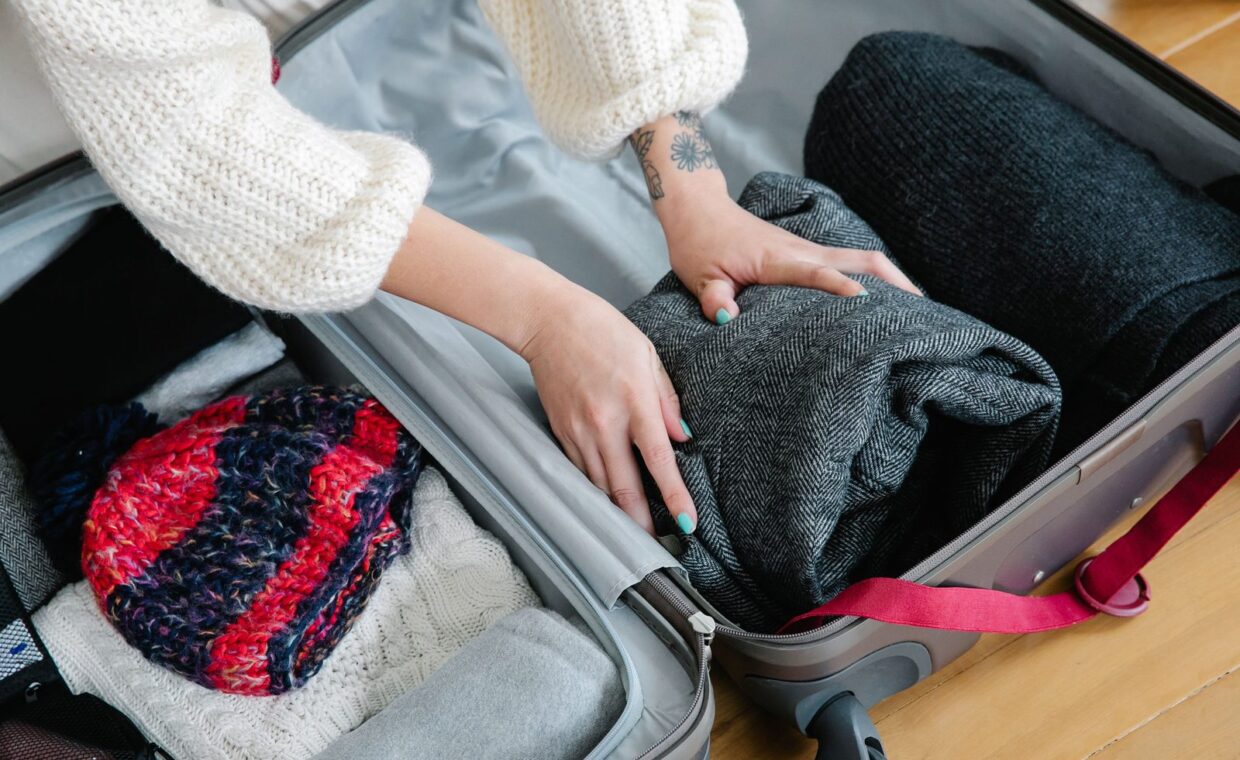
I used one 40-litre carry-on backpack and a standard luggage scale. The clothing pile was deliberately ordinary: seven tops, two pairs of trousers, a dress, a light fleece, a packable rain jacket, sleepwear, and a fortnight of underwear and socks. Nothing exotic, nothing folded with origami precision, just the brisk roll-and-stack most of us do at 11pm the night before.
For round one I distributed everything across three medium cubes. For round two I split the same clothes between two compression sacks, knelt on each to push the air out, and rolled the valves shut. I measured leftover space by how much I could still fit on top before the lid strained.
What the scale and the space said
The cubes packed tidy but tall. Everything fit, with maybe a paperback’s worth of room to spare. The compression bags flattened the fleece and rain jacket dramatically, that pile lost roughly a third of its height, and freed up enough space that I could have added a pair of shoes or a packing day’s worth of extra layers.
Weight, predictably, was identical to the gram in both rounds. The difference was entirely in the geometry.
Cubes vs compression, side by side
| Factor | Packing cubes | Compression bags |
|---|---|---|
| Space saved | Minimal, organises, doesn’t shrink | Significant on bulky items (roughly 25–35% less height in my test) |
| Weight saved | None | None, air is weightless |
| Organisation | Excellent, find anything in seconds | Poor, everything’s in one squashed lump |
| Wrinkles | Light, manageable creasing | Heavy creasing on anything structured |
| Repacking on the road | Fast, re-zip and go | Slow, refold, reseal, re-squeeze daily |
| Best for | Mixed wardrobes, frequent access, families | Bulky cold-weather kit, one-stop trips |
| Typical cost | Around $20–30 a set | Around $15–25 a set |
Read that “best for” row twice. It’s the whole decision in one line.
Where compression genuinely wins
If you’re heading somewhere cold, compression earns its place. Winter layers are mostly trapped air, and a sack collapses a week of knitwear into something you can actually close a bag around. For a single-destination trip, fly in, unpack into a wardrobe, fly home, the daily re-squeezing hassle never comes up, so you get the upside without the friction.
Compression also helps anyone fighting a strict size limit rather than a weight one. If your goal is to stay inside a 40-litre bag that an airline sizer is going to swallow whole, shaving volume off your bulkiest items is exactly the lever you need.
I’ve seen travellers compress beautifully, slide the bag into the sizer with a grin, then get pulled aside because it tipped 2kg over the cabin weight limit. Smaller is not lighter. Weigh before you leave home.
Where cubes quietly win
For almost every trip I take with my family, cubes win, and it isn’t close. With three people’s clothes in one shared bag, the ability to pull out exactly the right cube at a guesthouse, without exploding everyone’s wardrobe across the bed, is worth more than the space compression would save.
Cubes also pair beautifully with a wash-as-you-go habit. If you’re trying to pack light enough to skip checked baggage entirely, the real saving comes from carrying fewer clothes, not from squashing the ones you brought. Cubes make a small wardrobe feel organised; compression makes a big wardrobe feel temporarily smaller. The first habit is the one that lasts.
I now travel with two cubes for tops and underwear, plus one small compression sack reserved only for bulky layers and dirty laundry. Best of both: daily-access stuff stays sorted, the chunky things get flattened, and the dirty pile is sealed away from the clean.
A few buying notes from the bag drawer
Cheap cubes are fine, the fabric barely matters when all it does is hold a folded stack. Spend the saving on a decent zip, because that’s the part that fails first. For compression, the roll-style sacks travel better than the kneel-on-it vacuum bags; the flat ones crease everything and the valves give out after a season or two.
And don’t over-buy. A three-cube set covers most solo two-week trips. You don’t need the full rainbow of sizes my hallway tub insists you do. Pick the system that matches how you actually travel, and book the trip, comparing seats on Google Flights versus Skyscanner will save you far more than any organiser ever will.
Cubes for organisation and mixed wardrobes; compression for bulky cold-weather kit and tight size limits. Neither saves a single gram, if weight is your problem, the only fix is packing less.
Common questions
Do packing cubes actually save space at all?
Barely. Their job is organisation, not compression. You’ll fit roughly the same volume of clothes with or without them, but you’ll find everything far faster, which on a long trip matters more than a few spare centimetres.
Will compression bags wrinkle my clothes badly?
Soft knits and t-shirts bounce back fine. Anything structured, shirts, linen, a blazer, comes out heavily creased. Roll those items separately, or keep them in a cube and reserve compression for casual layers.
Can I use both together?
That’s what I do, and it’s the setup I recommend most. Cubes for daily-access clothing, one small compression sack for bulky items and dirty laundry. You get the organisation and the space saving without committing fully to either.
If you remember one thing, make it this: organisers shuffle space around, they don’t conjure it. Decide whether your real enemy is clutter or bulk, buy only for that, and put the rest of the budget toward the trip itself. My hallway tub is proof of what happens when you don’t.