
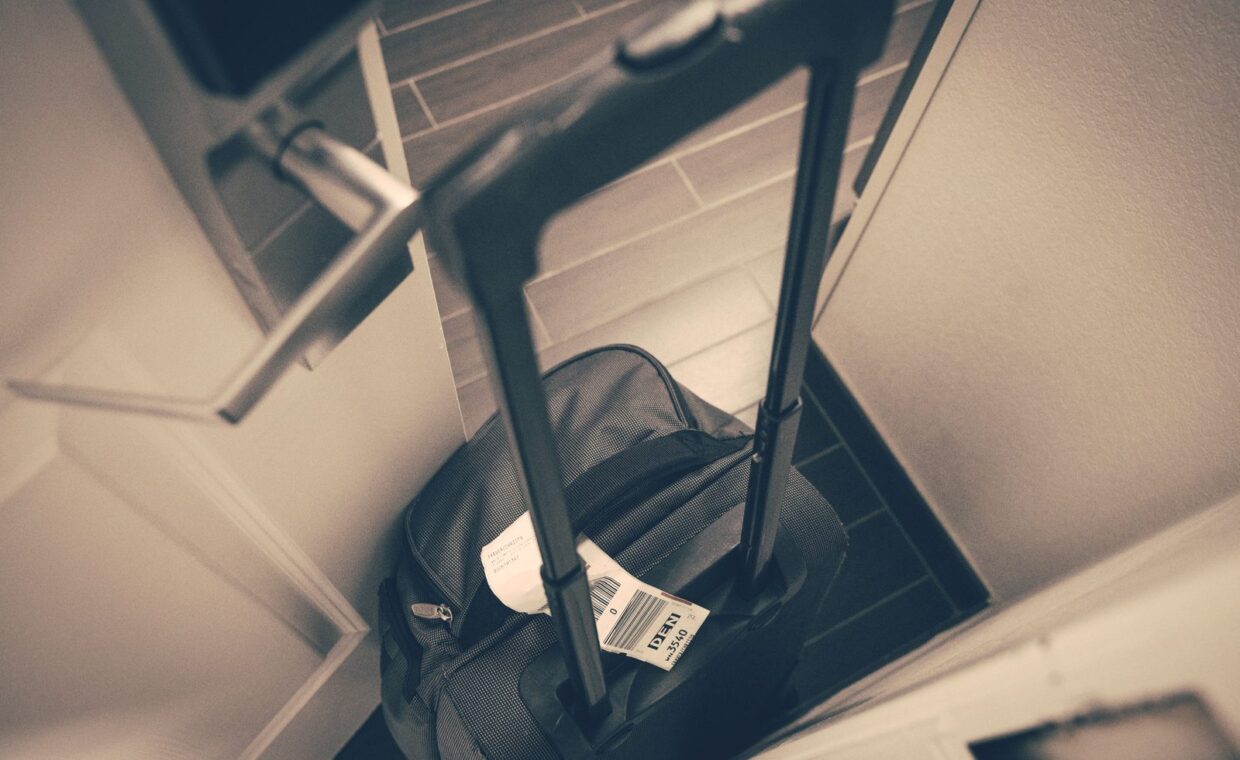
The gate agent’s scale is the least sentimental object in any airport. It does not care that you packed carefully at home, that your bag fit the sizer in the app’s photo, or that the person ahead of you got waved through. It reports a number, and if that number is 8.4 kilograms against an 8.0 limit, you are paying somewhere between £45 and £65 for the privilege of carrying your own bag onto the plane.
I have watched this play out more times than I can count, usually on low-cost carriers where the cabin-bag fee is the entire business model. The people getting charged almost never overpacked in a dramatic way. They made a small, late decision, a habit, really, that nudged them across an invisible line. Below are the five that show up again and again, why each one costs, and the fix.
1. Weighing the bag the night before, then adding to it in the morning
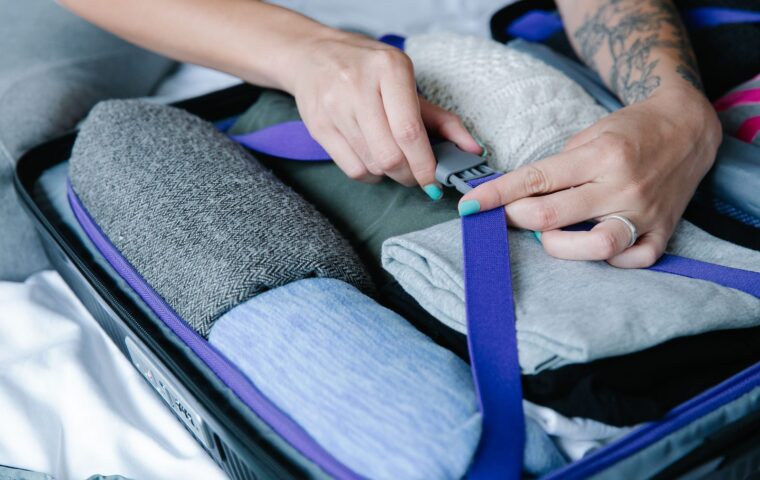
This is the most common and the most avoidable. You pack the night before, put the bag on a luggage scale, and it reads a comfortable 7.2 kg. Reassured, you go to bed. Then the morning happens: the charger you were still using, the toiletries you held back, the water bottle you filled, a paperback, the jacket that didn’t fit so you “just stuffed it in.” Each item is 150 to 400 grams. Four of them and you are over.
The cost is not only the fee. It is the timing, you discover it at the gate, with no chance to redistribute, while a queue forms and the agent has no incentive to be generous.
Weigh the bag last, not first, right before you leave, fully loaded, water bottle empty. Build in a 600-gram buffer below the stated limit. Scales at home and scales at the gate disagree by 200 to 300 grams surprisingly often, and that margin absorbs the difference.
2. Treating the personal item as a second suitcase
Most budget fares now split your allowance into a “personal item” (the small bag under the seat) and a larger cabin bag you pay extra for. The trap is gradual: you start using the under-seat bag as overflow. A second pair of shoes here, a toiletry bag there, your laptop plus its full sleeve plus a tablet. It swells until it no longer slides under the seat, and that is the exact test the agent uses.
The fee here is sneaky because it is not about weight at all. It is about dimensions. A bag that weighs almost nothing can still get flagged because it has gone fat and round and won’t fit the under-seat cage. Knowing what each tier permits is half the battle, so read the airline’s real rules rather than what you assume “personal item” means.
Carriers publish personal-item dimensions to the centimetre, often around 40 × 20 × 25 cm. Measure your bag packed, not empty. Soft bags expand; a 20 cm bag becomes a 26 cm bag once it is full, and that 6 cm is the difference between free and fee.
3. Wearing your “saving”, and carrying it instead
The classic budget move is to wear your heaviest items onto the plane: boots, the big coat, the chunky jumper. Sound, in principle. The failure is in execution. People put the coat on for the sizer check, then take it off the moment they sit at the gate because the terminal is 24°C, and drape it over the bag. Now it counts again.
I have also seen the reverse mistake, overpacking clothing in the first place so that even your “worn” layer can’t rescue the count. If your bag is heavy because you brought a week of outfits for a four-day trip, no jacket-wearing trick saves you. The honest fix is upstream: pack fewer clothes and do a quick sink wash on the road. Two days of clothing plus a rinse routine weighs a fraction of seven days of “just in case.”
4. Packing dense, heavy things you will never actually use
Weight is not distributed evenly across a packing list. A few categories of item account for most of the kilograms, and they are almost always the ones travellers bring out of habit rather than need: full-size toiletries, a hardback book, a second charging brick, “backup” shoes, a travel hairdryer that duplicates the one in every guesthouse.
Run the numbers and the picture is stark. A full-size shampoo and shower gel together can hit 700 grams; a pair of spare trainers is roughly 800; a hardback, 400 to 600. That is two kilograms of allowance spent on things you may not touch. Strip the categories that reliably go unused, there is a whole list of items frequent budget travellers stopped packing, and the weight problem often solves itself before you reach a scale.
| Habit item | Rough weight | Lighter swap |
|---|---|---|
| Full-size toiletries | ~700 g | 100 ml bottles (~120 g) |
| Spare shoes | ~800 g | Wear your bulkiest pair |
| Hardback book | ~500 g | E-reader or phone (~180 g) |
| Second charger brick | ~250 g | One brick, two cables |
5. Buying things airside and forgetting they have to come aboard
You cleared security with a bag that fits. Then you bought a litre of water, a sandwich, a duty-free bottle, a magazine, and a souvenir at the gate shop. On most low-cost carriers, that gate-shop bag is not a separate allowance, it has to go inside your cabin bag or be carried, and a duty-free litre of anything is roughly a kilogram on its own.
This habit also collides with tight connections. If you bought airside on the first leg and have to re-clear and re-board on the second, you are now juggling an over-limit bag at exactly the moment you can least afford a delay. It is the same family of error that turns up in these airport layover mistakes that strand budget flyers: a small purchase made without thinking about the boarding step that comes after it.
If you are already at the limit, the airside coffee and the duty-free bag are not free extras, they are the items most likely to push you over. Eat the sandwich before you board, or carry the bottle in your hand rather than forcing it into a bag that is already full.
How the fee maths actually works
It helps to see why these habits are punished so disproportionately. Gate fees sit far above the actual fuel cost of a few hundred grams, they are a deterrent and a revenue line. A bag 400 grams over does not cost the airline £55 to carry; it costs you £55 because the pricing is built to make pre-paying, or packing lighter, the rational choice. The airline wants that decision made at the booking page, not at the gate where you have no leverage. Once you see that, the five habits stop looking like bad luck and start looking like predictable triggers you can remove.
Will a friendly gate agent really charge me for 300 grams over?
Sometimes they wave it through, but you cannot plan around goodwill. Agents on commission-driven routes are measured on fee collection, and the scale reading is the official record. Treat the limit as hard and the leniency as a rare bonus.
Does the gate scale match my luggage scale at home?
Often not exactly. Cheap hook scales drift by 200 to 300 grams, and gate scales are calibrated to the airline’s advantage. Leaving a 500 to 600 gram buffer below the stated limit covers the disagreement.
Is it cheaper to pre-pay for a checked bag than risk the gate fee?
Almost always, if you genuinely need the space. A bag added at booking is typically half the gate price or less. The cheapest option, though, remains packing light enough that the question never comes up.
None of these habits make you a careless packer, they make you a normal one, which is exactly why airlines price for them. Weigh last, measure your bags full, keep the dense duplicates at home, and watch what you pick up airside. Do that, and the most unsentimental scale in the building reads a number you already expected.