
The first time I paid eleven euros for a flat, sad espresso, I was sitting on a famous square in Rome watching pigeons fight over a crumb. The coffee wasn’t special. The view was, briefly. Then the bill arrived with a “service” line I hadn’t agreed to, and the spell broke.
Here’s what I’ve learned dragging a backpack through too many capital cities: tourist traps rarely sell you a worse experience. They sell you the identical experience and charge double for the postcode, the same gelato, the same boat across the same water, the same fridge magnet, marked up for standing where everyone else stands.
Below are five of the most reliable ways your money leaks at the big sights, why each one costs more than it looks, and the cheaper version that’s almost always within a two-minute walk.
1. The cafe table with the famous view
This is the classic, and I fall for it less than I used to but more than I’d like to admit. A cafe directly facing the cathedral, the fountain, or the canal will charge a premium that has nothing to do with the coffee and everything to do with the chairs pointing at the landmark.
Why it costs you: You’re often paying a “coperto” or seated-service surcharge per person, plus inflated menu prices, plus the unspoken tax of a place that knows you’ll never come back to complain. A coffee that’s around €1.20 standing at a local bar becomes €6–€11 the moment it faces the monument.
The fix: Walk one block back from the square. Genuinely, one block. Prices roughly halve within fifty metres of any major sight. Drink your espresso standing at the counter like locals do, then carry a cheap takeaway cup to a bench with the same view. You lose the table and keep the moment.
If a menu has photos, a host waving you in, and prices in three currencies, you’re paying the view tax. The cafe locals actually use is usually the unglamorous one on the side street with a queue of people in work clothes.
2. The “we change money here” booth
Right by every big attraction there’s a bright kiosk promising “0% commission” currency exchange. The zero-commission part is technically true and completely beside the point.
Why it costs you: They make their margin on the exchange rate itself, which can be 8–12% worse than the real mid-market rate. On €300 of spending money, that’s quietly €25–€35 gone before you’ve bought a single coffee. The “no commission” sign is doing a lot of misdirection.
The fix: Skip exchange booths near landmarks entirely. Withdraw local cash from a bank-affiliated ATM, or pay by card and let the network do the conversion. If a card machine ever asks whether to charge you in your home currency, always say no, that prompt is its own little trap. It’s one of the easy wins a reader I wrote about used when she trimmed a two-week trip by forty percent without skipping anything fun.
3. The official-looking sightseeing bus and boat
Every photogenic city has a branded hop-on-hop-off bus or a “panoramic” river cruise, usually priced at €25–€40, sold by someone in a branded vest who appeared the second you looked lost.
Why it costs you: In a surprising number of cities, the exact same route is covered by a normal public bus, tram, or ferry for the price of a regular ticket, often under €3. You’re paying a tenfold markup for a recorded commentary and an open top. The view from seat 14 of the public ferry is the same water.
The fix: Before you book any tourist transport, search whether a public line runs the same stretch. Lisbon’s tram 28, the vaporetto in Venice, the Star Ferry in Hong Kong, the Bosphorus commuter boats in Istanbul, all do “sightseeing” routes at commuter prices. When a city genuinely rewards seeing it from a bundled pass, that’s a different calculation; I get into when those actually pay off in my piece on city tourist passes that pay for themselves.
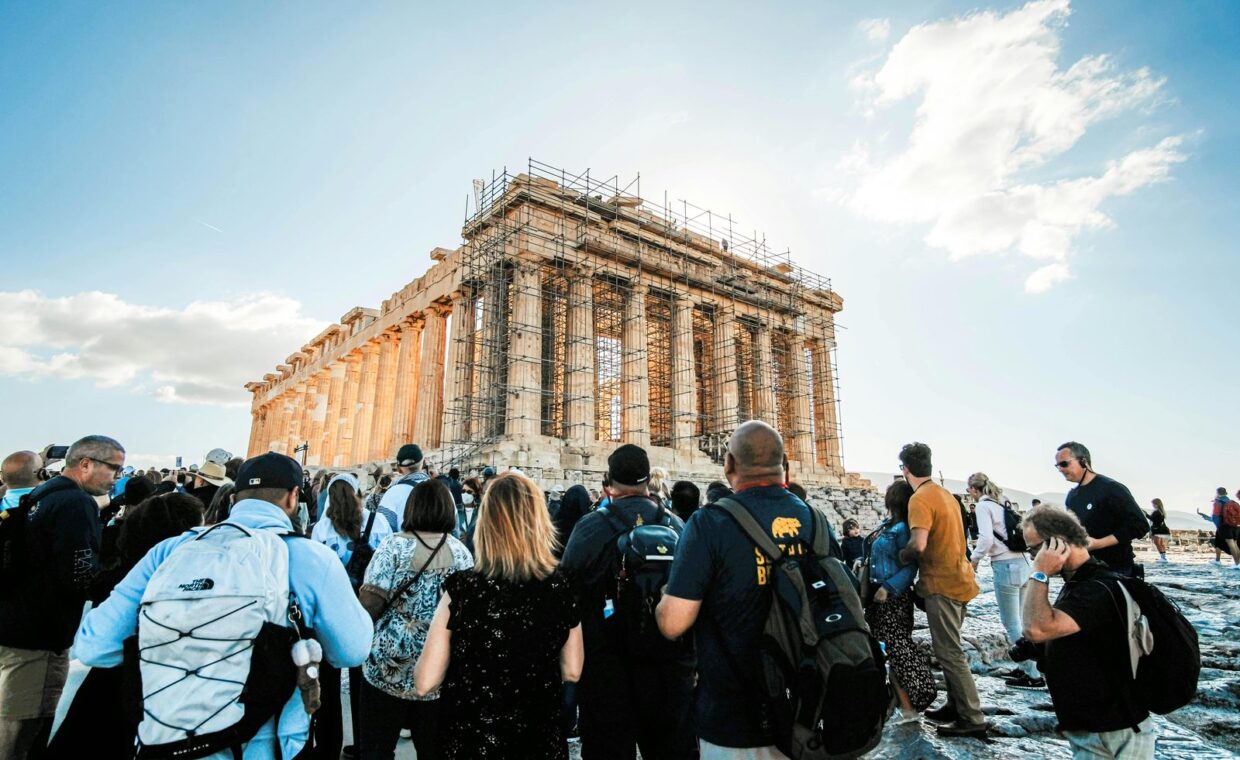
4. Skip-the-line tickets from the person outside the gate
You’re standing in a long line at a popular monument, and a friendly stranger offers to sell you a “skip-the-line” ticket right now, cash, no waiting. Relief is a powerful sales tool.
Why it costs you: Resellers and unofficial third-party sites mark up the face value by 30–100%, and sometimes the “skip” you bought is just the standard timed entry you could’ve reserved yourself for free. Worst case, the ticket isn’t valid at all and you’ve lost both the money and your place in the queue.
The fix: Book the official timed-entry slot from the attraction’s own website the night before, that is the legitimate skip-the-line, and it usually costs nothing extra. A two-minute booking from your phone beats handing cash to someone whose business model depends on your panic.
“Official partner” badges on resale sites mean very little. Cross-check the price against the monument’s own “.gov”, “.org”, or museum domain. If the third party is more expensive, you’ve found your answer.
5. The souvenir shop in the landmark’s shadow
The gift shop closest to the famous thing sells the most marked-up version of everything: the magnet, the keyring, the printed tote, the little Eiffel Tower that was made in the same factory as the cheaper one down the road.
Why it costs you: Proximity pricing again. A magnet that’s €1 at a market stall is €4–€6 in the shop with the best window display. Multiply that across a family buying gifts for everyone and the “small” souvenirs become a quiet budget leak.
The fix: Buy souvenirs two or three streets out, at a market or even a supermarket, local sweets, coffee, and spices make better gifts than resin figurines anyway. The identical trinkets cost a fraction once you leave the monument’s gravitational pull. Walk toward the neighbourhood, every time.
The pattern underneath all five
Notice that none of these fixes ask you to skip the experience. You still see the cathedral, cross the water, and bring something home, you just stop paying the surcharge for doing it inside an invisible radius around the famous thing.
That radius is real and small, usually a single block. The price gap between “facing the landmark” and “one street back” is the steepest discount in travel, and it costs nothing but a short walk. Build the habit of stepping out of the bubble before you reach for your wallet, and it compounds across a whole trip.
Before buying anything within sight of a major attraction, food, drink, tickets, gifts, transport, ask: is the same thing available two blocks away? If yes, walk. The answer is yes far more often than the souvenir shop wants you to think.
It’s the same logic behind bigger decisions, too. Stepping back to see the whole picture is exactly why, on certain multi-city trips, a single round-the-world ticket can quietly undercut booking each leg separately, you stop paying the convenience premium and start pricing the actual journey.
How do I know if a restaurant near a landmark is a tourist trap?
Look for menus with photos and multiple languages, staff actively waving people in, and a “service” or seating charge buried in the fine print. Then check a quieter street one or two blocks back, if the same dish is noticeably cheaper there, you’ve confirmed it.
Are hop-on-hop-off buses ever worth the money?
Occasionally, in a sprawling city with poor public transport, or if you genuinely want the narrated loop and limited time. But in most walkable European and Asian capitals, a normal tram or ferry covers the same scenery for a fraction, so check the public route first.
Is it safe to buy skip-the-line tickets from people outside attractions?
I’d avoid it. Even when the ticket is real, you’re paying a markup for something you can usually reserve free on the official site. Book the timed entry yourself the night before and you get the same line-skip with no middleman.
None of this requires a spreadsheet or a sacrifice, just a slightly suspicious eye and a willingness to walk. The view is free. The water is the same. Keep the difference and put it toward the next trip.