
The first time I added up a week in Chiang Mai, I genuinely re-checked the math. A fan room steps from the old moat, two market meals a day, a rented scooter, and a long Sunday at a waterfall, the whole thing came in under what a single airport dinner had cost me in transit. I sat there with my little notebook feeling slightly ridiculous.
That gap is why I keep coming back. Southeast Asia isn’t uniformly cheap anymore, and pretending otherwise sets you up for sticker shock in the touristy pockets. But pick the right base, show up at the right time, and a modest daily budget still buys something close to comfort: a private room, real food, a bit of slack for a massage or a boat.
So here’s my honest ranking of where that money stretches furthest right now, ordered by how much a careful traveler gets per dollar, not by which beach photographs best.
1. Chiang Mai, Thailand, the gentle landing
If you’ve never done this region, start here. Chiang Mai is the easiest place I know to live well on roughly $30 a day without feeling like you’re rationing anything.
A clean private room in the Nimman or old-city fringe runs about $12–18 a night off-peak. Street khao soi is a couple of dollars. The genuinely lovely part is the cafe culture, you can nurse an excellent flat white and free wifi for hours, which matters if you’re the type who needs a desk as much as a beach.
Rent the scooter, skip the day-tours. A $5-a-day bike turns the temples, the Sunday Walking Street, and a half-dozen waterfalls into free afternoons instead of $40 booked excursions.
2. Hoi An and central Vietnam, value with a view
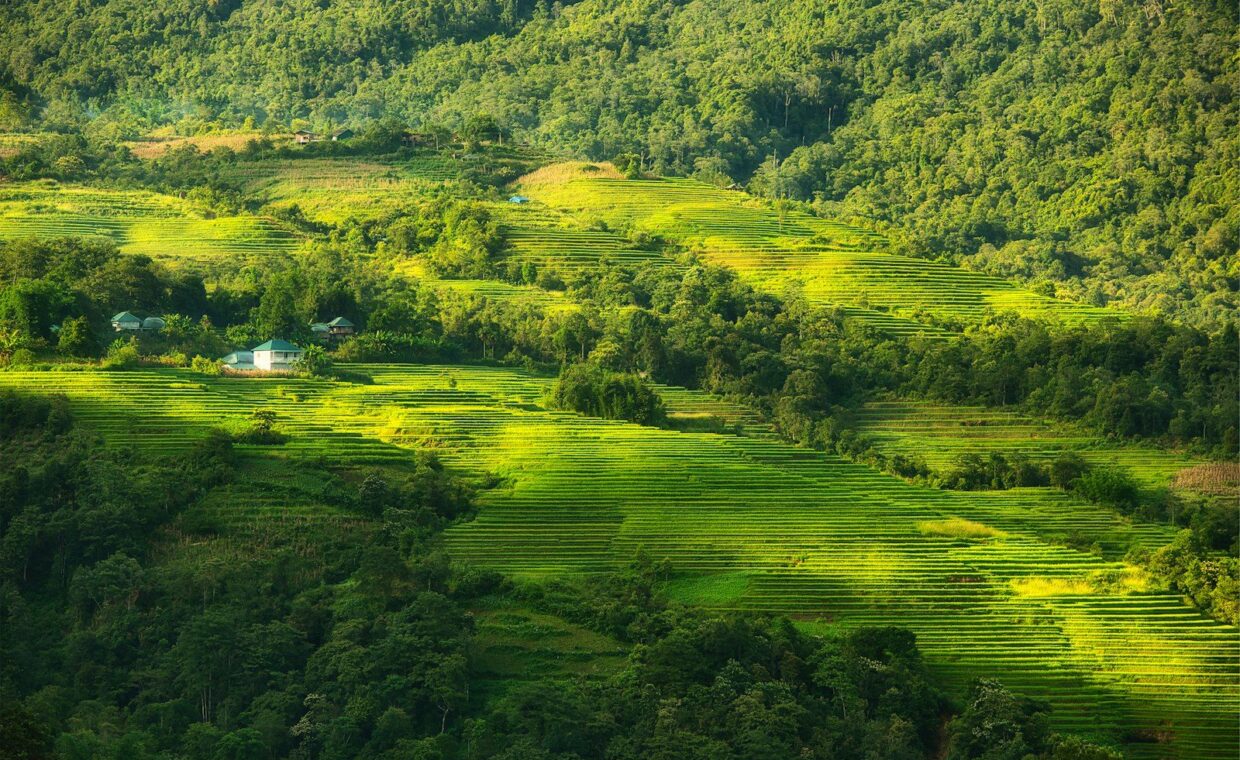
Vietnam is where my daily spend quietly drops to around $25 and the food gets better, not worse. Central Vietnam in particular, Hoi An, Hue, the Hai Van pass between them, is absurd value once the package-tour crowds thin out.
A garden guesthouse with a pool and breakfast included sits near $15. A banh mi is well under a dollar; a sit-down bowl of cao lau, maybe two. I once spent a full day cycling rice paddies, swimming, and eating three proper meals and struggled to spend $20.
The catch is the weather. Central Vietnam floods in autumn, so timing genuinely changes the trip, which is exactly the kind of calculation I get into in my piece on why shoulder season is the sweet spot for cheap, crowd-free trips.
3. Luang Prabang, Laos, slow on purpose
Laos asks you to downshift, and your wallet thanks you for it. Luang Prabang is small, walkable, and wrapped in mountains, and a modest budget here buys an unhurried week rather than a frantic one.
Riverside guesthouses go for $12–20. The night market’s vegetarian buffet, pile your plate as high as physics allows, costs about a dollar and a half, and I am not exaggerating. A shared minivan to the Kuang Si falls is a few dollars; the turquoise pools at the end are free.
You won’t find nightlife or fast internet. That’s the trade, and for a few days it’s a good one.
4. Siem Reap, Cambodia, the temple base that’s cheaper than its reputation
People assume Angkor Wat means a pricey trip. The temple pass isn’t trivial, budget around $37 for a single day, but everything wrapped around it is remarkably gentle on the money.
Off Pub Street, a guesthouse with a pool runs $10–15. A plate of fish amok and a fruit shake might total four dollars. Tuk-tuk drivers will quote a flat day rate to ferry you between temples, and splitting one with another traveler makes the famous sunrise basically affordable.
Buy the three-day Angkor pass instead of the one-day if you’ve got the time. Spread over three mornings it costs only a little more per day, kills the crowds, and turns a rushed checklist into an actual experience.
5. Penang, Malaysia, eat like a king, sleep cheap
Penang is where I send people who care about food above all else. George Town is a UNESCO old town stuffed with hawker stalls, and the eating is the entire point.
Beds creep up a touch here, a private room is closer to $18–25, but a legendary char kuey teow or laksa from a street stall is two or three dollars, and you’ll want three of them a day. Malaysia’s a step pricier than Laos overall, yet the food-per-dollar ratio is unmatched, so I forgive it.
It also has proper infrastructure: reliable buses, English everywhere, fast wifi. A soft landing with a hard-to-beat dinner attached.
6. Canggu and inland Bali, Indonesia, only if you dodge the trap
Bali earns a spot, but with a warning, because the island is two places now. Beach-club Bali will drain you as fast as anywhere in Europe. Inland and northern Bali, Ubud’s edges, Sidemen, Munduk, is where the old value lives.
A homestay with breakfast and a rice-field view is genuinely $12–18. Local warung food (nasi campur, heaped and delicious) is two dollars. Scooter, $5. The mistake is staying in the influencer pockets and ordering Western brunch; do that and your $30 day becomes a $90 day before you’ve noticed.
Bali’s also one of the best spots in the region for a longer, cheaper stay, which is where swapping rent for pet care comes in. I lay out how that works in my guide to what house-sitting really involves before you stay somewhere free.
How a sample week actually breaks down
Numbers in the abstract are easy to wave away, so here’s a rough week in one of the cheaper bases, Luang Prabang or central Vietnam, say, for one person living comfortably but not lavishly. Treat these as illustrative, not a quote.
| Item | Per day | Per week |
|---|---|---|
| Private room w/ breakfast | ~$15 | ~$105 |
| Three meals (mostly local) | ~$8 | ~$56 |
| Scooter or local transport | ~$5 | ~$35 |
| Coffee, water, a treat | ~$4 | ~$28 |
| One activity / entry fee | ~$3 | ~$21 |
| Rough total | ~$35 | ~$245 |
That’s a comfortable week, not a survival one. Travel slower, cook a little, share a room, and you can shave that to $25 a day without much pain.
A quick reality check before you book
None of this is fixed in stone, prices in the tourist hotspots have climbed, and a bad week of weather or a festival surge can rewrite the whole budget. The skill is the same one I use anywhere: estimate the daily cost honestly before you commit, then leave yourself slack.
It’s the same back-of-envelope habit I apply to pricier regions too. When I weigh, say, a southern-Europe trip in my comparison of whether Portugal or Spain costs less day to day, the method doesn’t change, only the numbers do. Southeast Asia just happens to flatter your budget more than most.
What’s a realistic daily budget for Southeast Asia right now?
For one person in the cheaper bases, Laos, Cambodia, central Vietnam, northern Thailand, around $30–35 a day buys a private room, local food, and small activities. Beach resorts and Bali’s clubs can easily double that.
Which country is the single cheapest?
Laos and Cambodia edge it on day-to-day costs, especially for accommodation and food. Vietnam is close behind with arguably better eating. Malaysia and Bali run a notch pricier but still strong value if you avoid the tourist pockets.
When does my money stretch furthest?
The shoulder months on either side of peak season, roughly the weeks bordering the dry-season crowds. Rooms drop, stalls aren’t slammed, and the weather is usually still fine. Just check regional rain patterns, as central Vietnam in particular floods in autumn.
If you only take one thing from this: don’t treat “Southeast Asia” as a single price tag. Pick a gentle base, show up just outside peak, eat where the locals eat, and a modest budget stops feeling like a constraint and starts feeling like permission to stay another week. That’s usually the week I remember most.