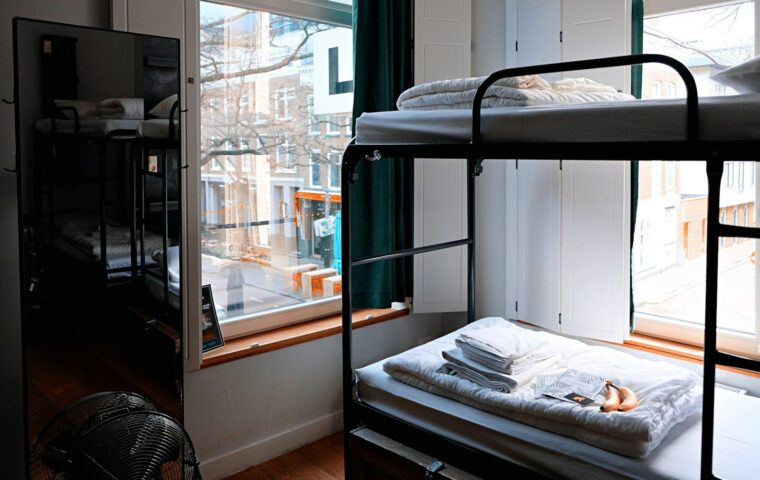


It’s 7 p.m. in a city I hadn’t planned to sleep in. My connecting bus died outside Tirana, and I’m on a curb with a dead phone and a hostel app showing one dorm bed left at triple the normal rate. Sound familiar? I’ve been there more than I’d like to admit.
Here’s what nobody tells you: a last-minute bed almost never has to cost a panic premium. That “only one left” urgency is exactly what the pricing engine is built to exploit. The night I just described, I walked past that 42-euro bunk and got a private room two streets over for 19 euros, cash, because I knew where to look.
This is the routine I run now, every time. None of it needs a fancy subscription or elite status, just about twenty minutes and a willingness to not click the first scary number you see.
Step 1: Kill the panic before you open any app
The single most expensive thing you can do is book in the first ninety seconds. Adrenaline makes you accept the first available rate, and rates at 6 p.m. on the day of are the worst rates of the entire booking cycle for most properties.
So before anything: find a bench, a cafe, a transit hall, somewhere you can sit for fifteen minutes. Charge your phone if you can. The mental shift matters. You are not stranded; you are a buyer in a market that resets its prices several times a night.
Give yourself twenty minutes of calm searching before you commit to anything over your normal nightly budget. In my experience the second or third option is almost always 30-50% cheaper than the first one that flashed up.
Step 2: Open the standby and same-day apps first
Regular booking sites show you the same inventory everyone else sees. The apps built specifically for tonight show you a different, often cheaper, slice. HotelTonight is the obvious one, properties dump unsold rooms there at a discount because an empty bed earns zero. I’ve booked a clean 3-star in Porto for 38 euros at 9 p.m. that was listed at 71 on the big sites.
For hostels, the Hostelworld app’s same-night filter and the standby beds on a couple of dorm aggregators do the same job. Check two or three apps, not one. They don’t share inventory, and the gap between them on the same night can be ten or fifteen dollars.
One honest caveat: the headline price on these apps is rarely the price you pay. Watch for the same junk that pads any cheap room, I’ve broken those down in detail in the hidden fees that inflate a cheap room after you book, and last-minute bookings are where they bite hardest because you’re rushing the checkout screen.
Step 3: Run the map view, not the list view
This is the step most people skip, and it’s the one that saves me the most money. Switch any booking app to its map view and look at the cluster of pins around you, not the algorithmically sorted list. The list pushes “popular” (read: higher-commission) properties up top. The map shows you the cheap place three blocks east that the list buried on page two.
When I do this, I’m scanning for the outlier pin, the one priced well below its neighbors. Nine times out of ten it’s a small guesthouse or a hostel that hasn’t optimized its listing, and that’s exactly the kind of place that gives you a fair walk-in rate.
Step 4: Phone or walk in, and ask the question
Apps take a cut, usually 12-18%. A small property knows this. When you call directly or show up at the desk, there’s room in the price that the app was eating. The magic question, asked plainly: “Do you have anything for tonight, and is that your best walk-in rate?”
I’ve watched a 28-euro online rate become 20 euros in cash at the desk because the owner would rather keep the whole sum than hand a fifth of it to a platform. This works best for independent guesthouses and family-run places. It does not work at chain hotels, where the desk clerk can’t override the system, don’t waste your nerve there.
Smile, say you just got into town, ask for the best price for one night, and then go quiet. Silence does the negotiating. The first person to speak after the number usually loses, and it doesn’t have to be you.
Step 5: Know your fallback beds before you need them
If the standard options are all priced like robbery, widen the definition of “bed.” A night bus or night train you were going to take anyway is free accommodation, I lean on that trick constantly, and turning dead transit time into a destination is half the point of treating a layover city as a free mini-holiday rather than a problem to survive.
Beyond transit, there’s a whole category of cheap sleeps that aren’t hotels at all, monastery guest rooms, university halls in summer, 24-hour saunas in some countries that let you nap for a few dollars. I keep a running list of unexpected places to sleep cheap that aren’t hotels bookmarked offline for exactly these nights. Knowing the fallback exists is what lets you walk away from a bad rate without flinching.
Step 6: Read the cancellation line before you tap “book”
Last-minute bookings are almost always non-refundable, which is fine if you’re certain, but get certain first. I’ve eaten a 35-euro charge once because I booked place A on the app, then found place B for cash, and place A wouldn’t refund. Lesson learned the expensive way.
So lock the cheapest real option, confirm it’s available for tonight (not tomorrow, date errors at 11 p.m. are real), and stop looking. Once you’ve got a confirmed bed under budget, close the apps. Chasing five more euros at midnight is how you end up with no bed at all.
What a typical same-night search actually costs
Here’s roughly how one recent scramble shook out across the options I checked in fifteen minutes. Numbers are illustrative, but the spread is real and typical.
| Option | What it showed | What I’d actually pay |
|---|---|---|
| First app result (list view) | “1 left” dorm bunk | ~$44 |
| Same-day app (HotelTonight) | Discounted 3-star | ~$38 |
| Map-view outlier guesthouse | Private room online | ~$26 |
| Same guesthouse, cash at desk | Walk-in rate | ~$19 |
Same night, same neighborhood, and a 25-dollar swing between the panic click and the calm walk-in. That gap is the whole game.
Sit down for twenty minutes, check two or three same-day apps, switch to map view, call or walk in to ask for the best rate, keep a fallback bed in mind, and confirm the date before you tap book. The first price is rarely the real price.
How late is too late to find a fair last-minute rate?
Counterintuitively, later can be cheaper. From about 8 p.m. onward, properties with empty rooms know they’re not selling them tonight, so same-day apps and front desks get more flexible. The risk is availability, not price, in a small town, beds run out before the discounts kick in, so don’t push it past 10 p.m. there.
Is it rude to ask for a cash discount at the desk?
Not at independent places, it’s expected in a lot of the world. You’re saving the owner the platform commission, so a polite ask is a fair trade, not a cheek. At chain hotels it’s pointless because staff can’t override the rate, so save it for guesthouses and family-run spots.
Should I just book the first refundable room and keep searching?
Only if it’s genuinely free to cancel and actually refundable, read that line carefully. Holding a refundable bed as a safety net while you hunt for cash deals is smart. Holding a non-refundable one and then booking something else, like I once did, just means paying for two beds and sleeping in one.
None of this is complicated. It’s mostly about refusing to let the “only one left” timer decide for you. Slow down, check the unglamorous options, ask the cheeky question at the desk, and that 7 p.m. curb stops being a crisis. I’ll see you out there, probably checking the map view.