

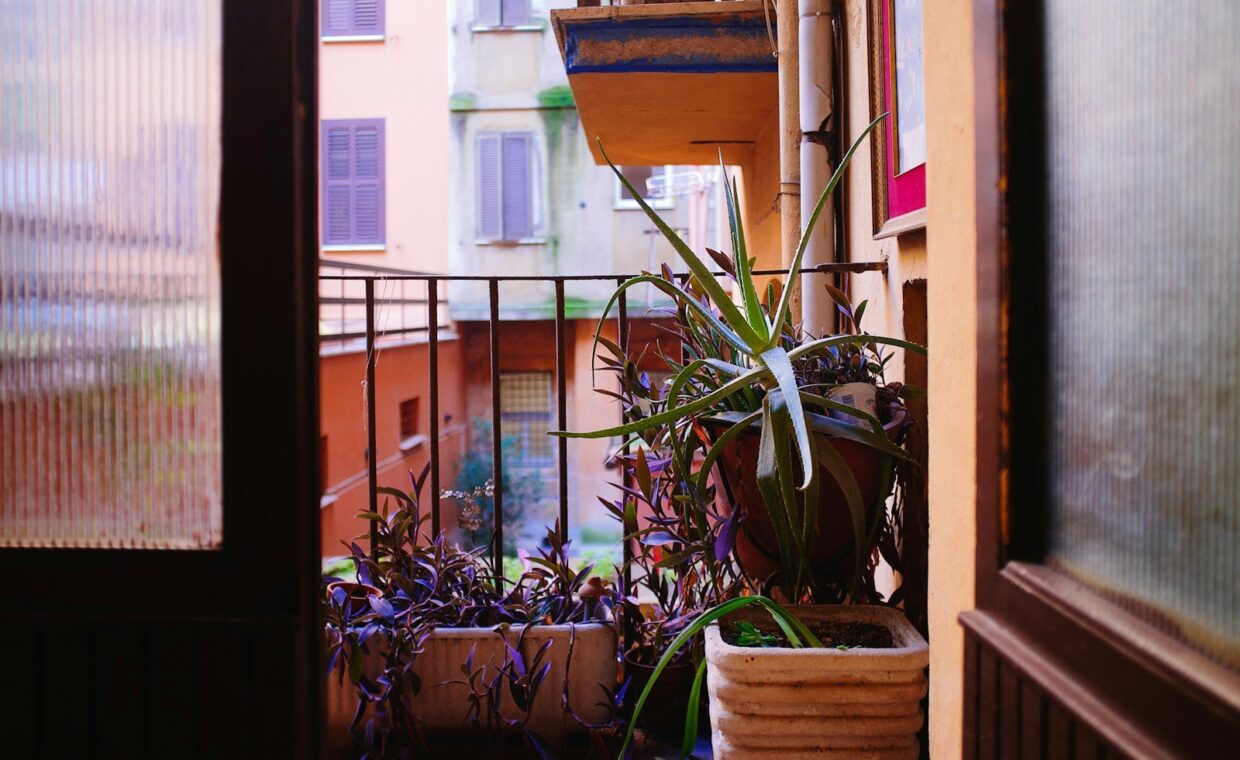
The first thing Lena noticed in the Lisbon apartment was the smell of warm tile and somebody else’s basil plant, half-dead on the balcony, that she’d spend three weeks coaxing back to life. The owners had left at dawn for a wedding in Brazil, leaving her a fat orange cat named Pêssego, a list of bin days, and a set of keys still warm from the landlord’s hand.
She paid nothing for that apartment. Not a deposit, not a cleaning fee, not a single euro of rent. And it was the first of three places she would live that summer, across three cities, on a housing budget of exactly zero.
Lena is a composite, stitched together from travelers I’ve shared kitchens and overnight buses with, but every arrangement here is the kind that genuinely happens. What makes her summer worth pulling apart isn’t luck. It’s how she chained one free bed into the next, with almost no gaps, so the calendar never left her stranded in a hotel.
The shape of a rent-free season
Her summer ran roughly fourteen weeks, mid-May to late August, in three overlapping stints. Lisbon first: a three-week house-sit minding Pêssego and the basil. Then a month in a small Andalusian town, working mornings at a family-run guesthouse for a private room. Finally six weeks in Berlin, a shared house-sit, then a hostel work-exchange when the sit ran out.
The trick was the overlap. Lena booked the Lisbon sit before she left home, then spent those quiet Portuguese evenings, cat on her lap, a plate of grilled sardines going cold beside her laptop, applying for the next two. By the time she handed back the Lisbon keys, Andalusia was confirmed; by the second week in Spain, Berlin was locked.
A rent-free summer isn’t one big win. It’s three or four medium arrangements that you line up like dominoes, each one bought with time, trust, or a skill rather than money.
Lisbon: a cat, a basil plant, and a trial run
House-sitting was the gentlest entry point, so she started there. The deal was simple: live in the flat, feed the cat twice a day, water the plants, send the owners a photo every few days so they could sleep. No money changed hands either way.
What it cost her was structure. She couldn’t vanish for a four-day trip to the Algarve, because Pêssego needed feeding morning and night. So she planned her days around two anchors, coffee and cat at eight, dinner and cat at seven, and filled the middle with long walks through Alfama and the custard tarts still hot from the oven.
The hidden value of a first sit is reputation. She finished with a glowing review that did more for her next applications than anything she could have written about herself. If you’re building a profile from nothing, I’d point you at how work exchanges actually trade your hours for a free bunk as the companion idea, between sitting and exchanging, you almost always have one option open somewhere.
Andalusia: mornings for a room
The Spanish leg was the most physical. A small whitewashed guesthouse, eight rooms, run by a couple who needed help through their busy stretch. Lena worked four hours each morning, stripping beds, scrubbing the terrace, hauling laundry up a staircase that punished her calves, and got a private room over the lemon trees, plus most mornings’ leftover tortilla.
This is where the food-led part of her summer really opened up. The owner’s mother cooked lunch for the staff most days, gazpacho the colour of sunset, salmorejo so thick a spoon stood up in it. She spent around eight euros a day on everything that summer, because so many meals arrived as part of the deal.
Lena always asked, before committing, exactly how many hours per day and which tasks. “Help around the place” can quietly become a full shift. A clear number, four hours, mornings only, protects both the host and you.
One caution she learned the hard way on an earlier trip: a “free” room in an expensive region can still drain you if every meal out and every bus costs double. She’d already read up on the kind of places that look cheap but quietly empty your wallet, and she chose a sleepy inland town precisely because the savings held up once she was actually living there.
Berlin: splitting a sit, then sliding into a hostel
Berlin was the ambitious finale: six weeks in a city she loved, covered by two stitched-together arrangements. For the first month she co-sat a flat in Neukölln with a friend and a dog who needed three walks a day. Splitting the duties meant each of them could disappear for a long weekend while the other covered the dog.
When that sit ended, she had ten days before her flight and no bed, so she took a hostel work-exchange: reception shifts and a little social-media posting for a dorm bunk. Louder and less private than the guesthouse room, but free, and the hostel kitchen became her favourite room in Berlin, a rotating cast of travelers cooking shared pasta, the windows fogging up with garlic and conversation.
How the numbers actually landed
Here is the rough shape of what a rent-free summer saved versus a conventional one. The figures are illustrative; the gap is the point.
| Cost | Conventional summer abroad | Lena’s rent-free version |
|---|---|---|
| Accommodation (14 weeks) | ~$4,200 (budget rooms) | $0 |
| Food | ~$25/day | ~$8/day (many meals included) |
| Local transport | Roughly the same | Roughly the same |
| Time cost | None | ~3–4 hrs/day on exchange legs |
The accommodation column is the dramatic one, but notice the food line. Cheap or free meals showed up everywhere a bed did, guesthouse lunches, the hostel’s shared pasta, the basil she nursed back into pesto. Free housing usually comes bundled with a kitchen and, often, company at the table.
What she’d warn you about
It wasn’t a holiday in the lying-on-a-beach sense. On the exchange legs she was working; on the sits she was tied to an animal’s schedule. There were lonely evenings, a washing machine that flooded a Berlin hallway at midnight, and one afternoon when Pêssego slipped out a window and strolled back, unbothered, hours later.
The single biggest risk is a gap between arrangements. Lena kept a small emergency fund, enough for three or four hostel nights, precisely so a cancelled sit couldn’t strand her. Twice she nearly needed it.
She also got sharper about logistics. Knowing the quiet tricks for finding a room below its listed price mattered for those buffer nights when she did briefly pay, a cheaper fallback bed is what made the whole chain feel safe rather than reckless.
Chain arrangements with overlap, confirm the next bed before you leave the current one. Bank a glowing first review; it opens every door after it. Pin down exact hours on any exchange. Keep a hostel-money buffer for the gaps. And let the free kitchens feed you, that’s where half the savings, and most of the summer, actually live.
Is a summer like this actually free, or just cheap?
The housing is genuinely free, no rent, no deposit. You still pay for flights between cities, local transport, and some meals, and you pay in time on the work-exchange legs. Lena’s total non-flight spend ran around eight to ten dollars a day.
How far ahead should you book each arrangement?
Lock the first stay before you leave home, then apply for each next one while you’re settled in the current place. Aim to confirm the following stint a week or two before the current one ends, so you never face an open gap.
What if a host cancels last minute?
This is why a buffer fund matters. Keep enough for three or four hostel nights so a cancellation is an inconvenience, not a crisis. Overlapping applications helps too, if you’ve been talking to a second option, you can often pivot fast.
Lena flew home with a tan, a phone full of cat photos, and a housing bill of nothing for an entire summer. The pesto plant, for the record, survived. Start with one sit, treat the first review like gold, and you’ll be surprised how quickly the next free bed appears.