
The first time I ordered a meat-free lunch in central Portugal, I pointed at the word I was sure meant “vegetable soup” and sat back feeling clever. What arrived was a steaming bowl the colour of terracotta, rich with smoked sausage and a knuckle of something I did not want to identify. I ate the bread and olives, paid for a meal I could not touch, and walked back hungry and nine euros poorer.
That bowl taught me something I have since watched plenty of travelling vegetarians learn the expensive way: eating meat-free abroad is rarely about willpower or scarcity. It is about language, timing, and knowing where the cheap calories hide. Get those wrong and you pay twice, once at the till and once in the hour you spend hunting for a backup.
Here are the five mistakes I see most often, why each quietly drains your budget, and the fix that keeps my own food spend low.
1. Trusting a single word to carry the whole order
“Vegetariano” looks reassuring on a menu. So does a little green leaf icon. But a word tells you what a dish is called, not what is simmering inside it. Across much of southern Europe, a “vegetable” dish is built on a meat or fish stock as a matter of course, and nobody mentions it because to them it is not the point.
The cost is sneaky. You order with confidence, the plate arrives wrong, and now you either eat around it, send it back (awkward, and not always refunded), or buy a second meal elsewhere. One mistranslation doubles the price of lunch.
Learn the three phrases that actually matter in the local language: “no meat,” “no fish,” and “is there meat stock in this?” That last one does the heavy lifting. Save them in your notes app so you can show the screen when your accent fails you, which it will. I treat menus as the start of a conversation now, not a contract, and a ten-second question saves the nine-euro bowl.
2. Eating where the menus have photos and English subtitles
The restaurants that go out of their way to look vegetarian-friendly, the ones with laminated photo menus and a cheerful “VEGGIE OPTIONS” sign in the window, are almost always the priciest on the street. You pay for that convenience in every dish.
Meanwhile, the family-run place two doors down, with a chalkboard you cannot read, is often half the price and twice as good. Ordering there just takes a little nerve and a little homework.
The gap between tourist and local pricing yawns widest where there are too many visitors, which is one reason I do so much of my eating in off-season beach towns where the kitchens cook for locals again rather than for the summer crowd. The fix is not to avoid translated menus entirely; just treat them as a backup. Scan the window prices of three places first, and the cheapest one with a queue of locals is your answer.
3. Skipping the market because the kitchen feels like effort
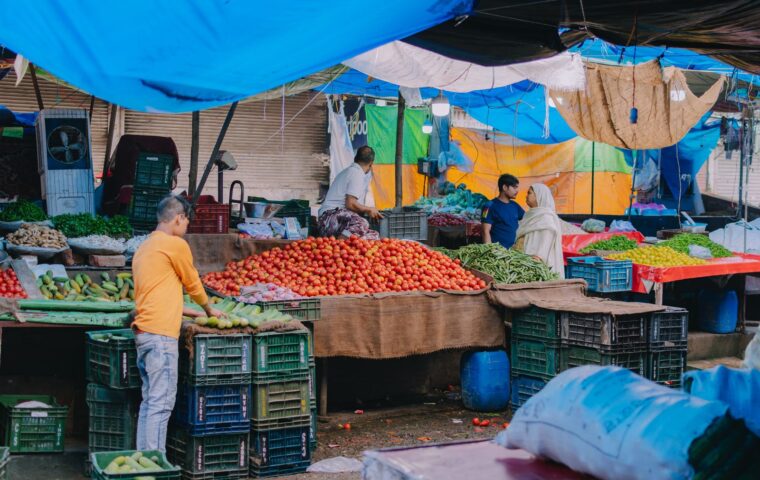
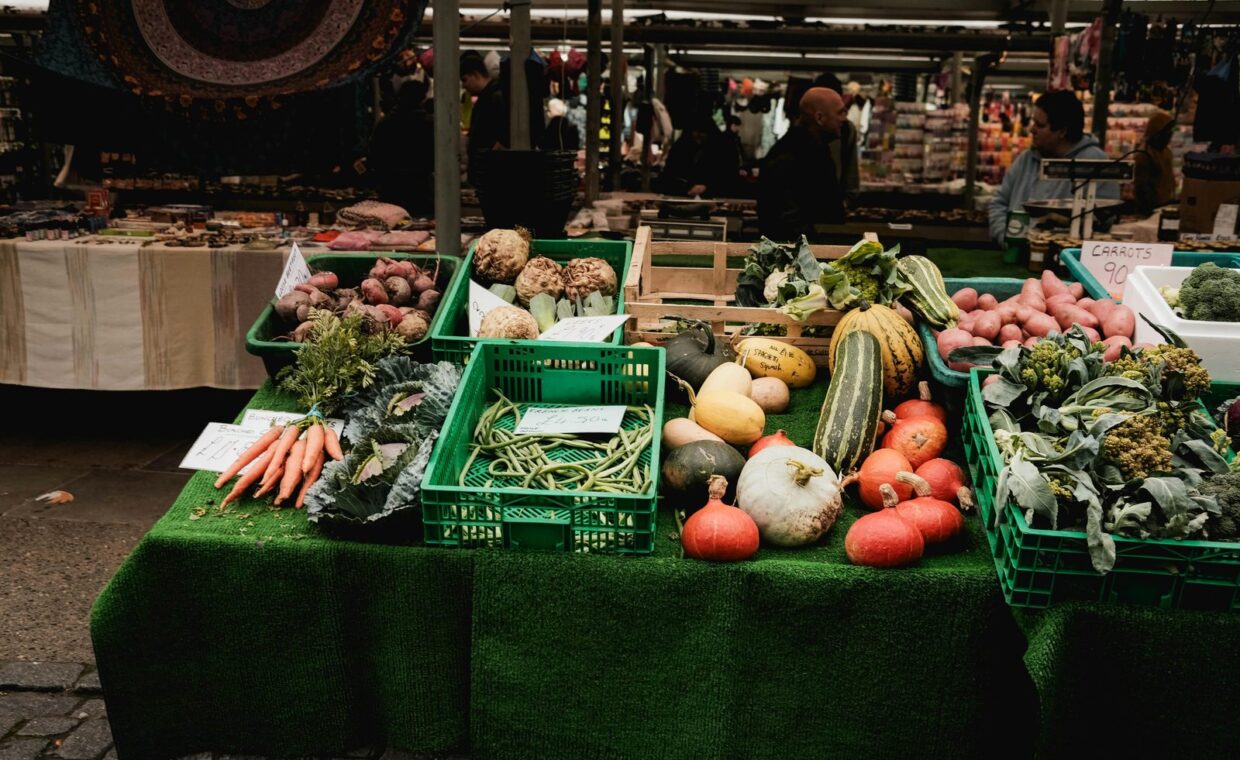
This is the big one, and it is where vegetarians have a structural advantage that most of us waste. A market haul that feeds a meat-eater modestly feeds a vegetarian like royalty. Tomatoes warm from the sun, a wedge of local cheese, good bread, olives, some fruit, and you have lunch for two for what one café charges for a single sad sandwich.
The mistake is talking yourself out of it. “I do not have a kitchen.” “I do not want to carry groceries.” So you default to restaurants and watch your food budget triple.
On a recent trip I spent roughly four euros at a Saturday market: cherry tomatoes, a fist-sized piece of sheep’s cheese, a loaf, and three peaches. It fed two of us with leftovers. The café across the square wanted around seven euros for one plain omelette.
You do not need a stove for produce, cheese, bread, and fruit, and a hostel kitchen handles anything that needs heat. Vegetarian ingredients are cheap nearly everywhere; restaurant labour is not.
4. Letting the drinks bill quietly outrun the food
You can nail every meal, eat beautifully for pennies, and still blow the day’s budget on what you sip. A bottled water here, a fresh juice there, a glass of wine because the terrace is lovely, and the drinks somehow cost more than the food.
Vegetarians fall into this easily because we tell ourselves the meal was so cheap that the extras are earned. A €4 smoothie twice a day is a €56 week, which in a lot of places is several nights of accommodation.
I am not saying drink tap water and sulk. I am saying notice the pattern. These leaks are so consistent that I wrote a whole separate piece on the drinks habits that wreck an otherwise cheap food budget, because they undo more careful eating than any overpriced dinner ever could.
Squeezed-to-order juice is the most photogenic budget leak there is. It feels healthy and local, yet costs several times a piece of whole fruit. Buy the orange, not the glass.
Carry a refillable bottle, default to the house tap, and save the terrace glass of wine for the meals that deserve it.
5. Improvising every meal instead of carrying a backup
The most expensive vegetarian moment is the unplanned one. It is 9pm, the market shut hours ago, the one veggie-friendly place is closed on Mondays, and you are starving in a town that thinks a ham sandwich is vegetarian. So you cave and buy whatever costs the most and satisfies the least.
Hunger makes terrible financial decisions on your behalf. When your blood sugar is on the floor, a €12 mediocre pasta in the first open place looks like salvation. It is a tax on poor planning.
The fix costs almost nothing: keep a small, boring emergency stash. A bag of nuts, a couple of cereal bars, a piece of fruit. It buys you the patience to walk past the panic-purchase and reach the place you actually wanted.
People who travel slowly understand this instinctively. The couple in our vanlife food-budget case study kept their weekly spend low largely because they never let themselves get cornered, hungry, and out of options at once. A buffer in your bag is the portable version of the same discipline.
Learn three menu phrases instead of trusting one word. Skip the photo-menu places for the chalkboard ones. Shop the market. Watch the drinks bill as closely as the food. And carry a small backup so hunger never does your spending for you.
How the mistakes stack up
None of these are dramatic alone: a wrong order here, an overpriced juice there, one panicked late dinner. The damage is that they compound. String a few together in a week and a budget you thought was tight has grown by half, with nothing to show for it but meals you did not enjoy. Sealed up, meat-free travel is one of the cheapest ways to eat well, because the ingredients are on your side.
Is it really cheaper to eat vegetarian while travelling?
Usually, yes, if you cook some meals. Vegetables, legumes, bread, and cheese are cheap in most markets and are the dishes restaurants mark up least. The savings vanish only when you eat every meal out.
How do I make sure a dish has no hidden meat or fish stock?
Ask directly rather than relying on the dish name. Keep the phrase “is there meat or fish stock in this?” saved in the local language and show it on your phone. Soups, rice dishes, and anything braised are the usual culprits.
What should I keep as an emergency food backup?
Something filling and non-perishable: nuts, cereal bars, a piece of fruit, or a single-serve nut butter. It only has to bridge the gap until you reach somewhere worth eating.
Eat the meaty mistake-soup once and you will never forget to ask again, but you do not have to learn it the way I did. Pack a few phrases, find the market, mind the drinks, and carry a snack for the bad nights. Do that, and meat-free travel becomes some of the best, cheapest eating on the road.