
The smell hits you before you’re properly awake: warm bread, coffee going slightly bitter on the hot plate, the sweet steam off a tray of stewed apricots. A free hotel breakfast is one of the small luxuries of budget travel, and on the mornings I’m running a tight food budget, it’s also a piece of strategy.
Because here’s the thing nobody at the buffet says out loud. That spread isn’t only breakfast. With a little care, the right pieces of it become lunch, eaten on a park bench four hours later while everyone around you is paying restaurant prices. I’ve crossed half of Europe doing exactly this, with the etiquette that keeps it gracious rather than greedy.
So let’s walk the room together: eight ways to stretch that morning spread into a second meal, without becoming the person the staff start watching.
1. Build a sandwich the buffet didn’t know it was making
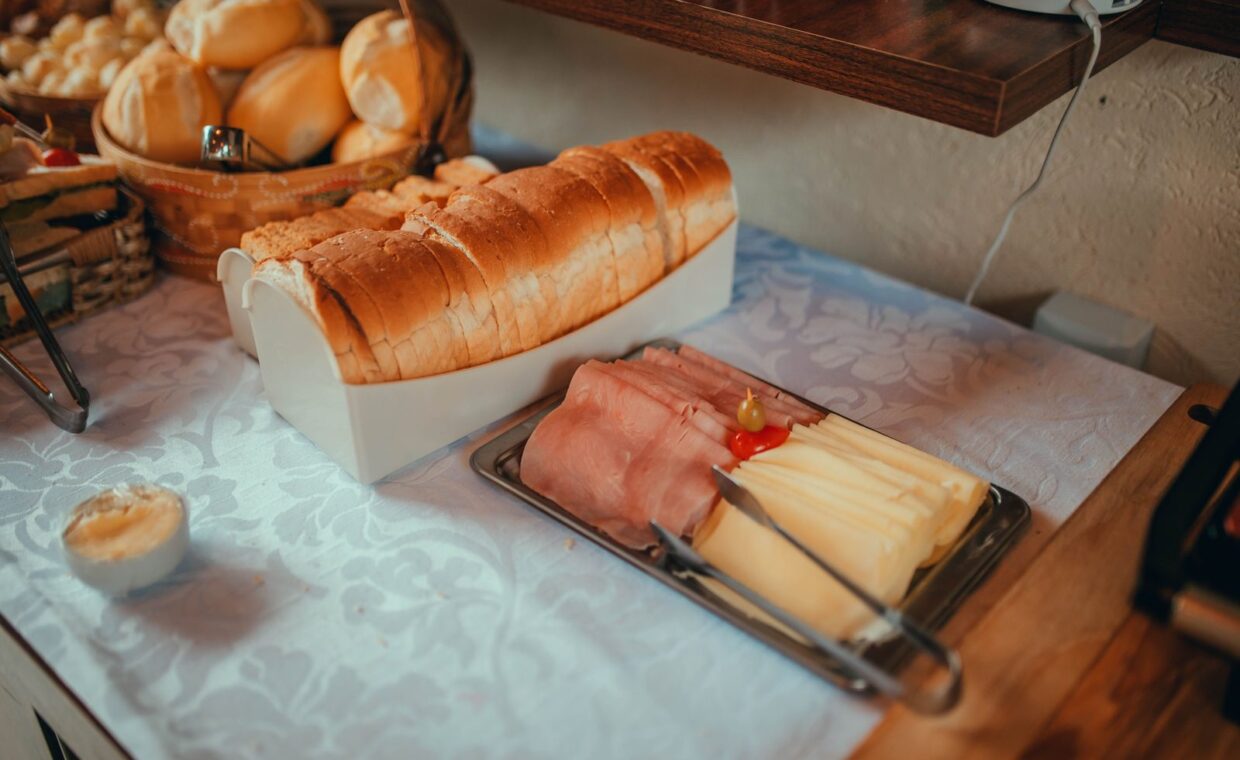
Most hotel breakfasts already contain a sandwich; it’s just scattered across three tables. There’s bread by the toaster, sliced cheese and cured meat near the cold cuts, maybe tomato and cucumber by the salad bowls. Assemble it the way you’d assemble it at home.
I like a soft roll, a slick of butter, a slice of Emmental, two folds of ham, and thin tomato that I salt lightly so it tastes of something by noon. Wrap it in a clean napkin, press it flat, and it travels beautifully in a side pocket, by lunchtime the flavours have settled into each other.
2. Treat the egg station as your protein anchor
A lunch that’s only bread leaves you hungry again by three. The fix is protein, and breakfast is generous with it. A hard-boiled egg is the most portable lunch component ever invented; it survives a backpack, peels cleanly, and needs nothing but a pinch of salt.
If there’s a hot station doing scrambled or an omelette to order, eat that there and now, while you save the boiled eggs and cheese for later. Eat the perishable, pack the stable, that single rule shapes almost everything that follows.
Hot and saucy gets eaten at the table. Dry, firm, and wrapped-able gets saved for lunch. Yogurt and soft fruit sit awkwardly in between, so only pack them if your bag has a sealed pocket.
3. Let the pastry basket do double duty
Pastries are the easiest thing to over-take and the easiest to justify, because they keep. A croissant or a dense bit of banana bread at 8am is breakfast; the second one, tucked away, is the carbohydrate half of lunch or an afternoon snack on a long walk.
Go for the sturdy ones. A plain croissant, a slice of pound cake, a seeded roll will all be good hours later. The custard tart and the cream-filled anything will not, and a leaking pastry in your bag teaches a lesson you only need once.
4. Save the fruit that travels, skip the fruit that sulks
Whole fruit is the buffet’s gift to the budget traveller. An apple, a firm pear, a banana, a clementine: each is a self-packaged lunch component that asks nothing of you. I almost always leave with a banana for now and an apple for later.
The pre-cut melon and the bowl of berries are a trap: wonderful at the table, a wet mess in three hours. If you adore them, eat them on the spot and carry something firmer. Fresh fruit is one of the cheapest ways to eat well on the road, something I get into more in these common vegetarian travel-food mistakes if you’re skipping the meat.
5. Make a small, honest plate to carry
This is where etiquette matters most. The goal is a modest second meal, not a raid that leaves the trays bare for the family behind you. I take what I’d eat at one sitting: a sandwich’s worth of components, one egg, one piece of fruit, one pastry. That’s lunch, not a picnic for six.
Bring your own small container or a zip bag and pack discreetly, at your table, not standing over the serving dishes. Loading a sandwich bag directly at the buffet line is the move that gets a polite word from staff, and fairly so.
Buffets are priced for in-the-moment eating, not stockpiling. Many hotels explicitly ask guests not to remove food, and a few add a charge if you do. An apple and a roll for the road is normal; filling a tote bag is not. When in doubt, ask the staff, most will happily wrap a roll for you.
6. Drink your expensive calories now, for free
The coffee, the tea, the glass of juice: these are the items you’d pay the most for at a café and can drink for nothing here. So drink them now, properly, a second cup if you like. That’s one fewer four-euro coffee bought out of habit at eleven.
Fill your bottle at the water station before you leave; cold water all day removes the impulse to buy a drink every time you’re thirsty. Beverages are sneakily one of the biggest leaks in a food budget, which I’ve ranted about in these drinks habits that wreck a cheap food budget.
7. Time your morning around the buffet, not the clock
A late, slow, generous breakfast is a budget tool in itself. If you eat well at nine and carry a light lunch, you’ve covered two meals before noon and only need one real restaurant meal in the evening. Two-meals-from-one works best when the first one is unhurried and the second is small.
This pairs perfectly with a long layover. I’ve turned a six-hour airport gap into a free day in the city on exactly this logic: big hotel breakfast, packed lunch in the bag, money saved for the evening. There’s a whole approach to turning a layover city into a free mini-holiday, and a packed breakfast is the quiet engine behind it.
8. Carry the right kit and the whole thing gets easy
Doing this well takes almost no gear. A couple of napkins for wrapping, one reusable container or a sealable bag, a refillable water bottle, and a small fork if you’ll want yogurt later. That’s the entire system.
Keep the kit in your day bag so you’re never improvising with a flimsy napkin and a prayer. Once packing a lunch becomes a thirty-second habit rather than a daily decision, the savings stack up without you really noticing.
A bought lunch on the road runs maybe ten to fifteen euros a day. Stretch breakfast into lunch across a one-week trip and you’ve quietly kept around seventy to a hundred euros in your pocket, roughly a night’s accommodation, for the cost of an apple and a wrapped roll.
Is it actually allowed to take food from a hotel breakfast buffet?
It depends on the hotel. Taking a piece of fruit or a roll for the road is widely accepted, but some buffets explicitly ask guests not to remove food and a few will charge for it. A quick glance at the signage or a friendly question to the staff settles it, and most are happy to wrap something for you.
What buffet foods travel best for a packed lunch?
Dry and firm items win: bread rolls, hard cheese, cured meat, hard-boiled eggs, plain pastries, and whole fruit like apples and bananas. Skip anything wet or creamy, yogurt, cut melon, custard pastries, unless you have a sealed container, because they turn into a mess by lunchtime.
How do I do this without looking greedy?
Take only what amounts to one modest meal, and pack it discreetly at your table rather than over the serving dishes. The difference between fair and greedy is roughly an apple and a roll versus a tote bag full of cold cuts.
The morning I learned all this, I sat in a Porto guesthouse with a roll, a wedge of cheese, and an apple wrapped in my bag, watching the light come up over the tiled rooftops. Lunch was already sorted. That’s the quiet pleasure of it: not just the money saved, but the smug certainty that the day’s first good meal has already paid for the second.